Chủ Nhật, 6 tháng 3, 2022

The Rocky Mountaineer train has a glass roof for you to take in all of nature's beauty

The Rocky Mountaineer train has a glass roof for you to take in all of nature's beauty

Train travel is one of the greatest and most sustainable ways to see the world and there's one experience in particular that every rail enthusiast will have high on their list: Canada's Rocky Mountaineer train.


If your train rides have always been about getting you from A to B, this is the game-changing bucket list adventure that will change everything you know about railways.

Offering a holiday experience where the journey is the attraction, the Rocky Mountaineer train is the ultimate ride for nature and wildlife fans.

You won't find standard carriages on the Rocky Mountaineer either and, unlike the Orient Express or Royal Scotsman, it's not about transporting you back to the glamour of the Golden Age of travel with opulent interiors. The Rocky Mountaineer train highlights Canada's captivating scenery – and its impressive glass-domed rail carriages are why it's one of the greatest railway journeys in the world.

While you'll find many luxuries on board this train, including the dining (think local wines and fresh salmon plucked from the Pacific Northwest), the five-star feature every nature lover wants to find on a train is access to the surroundings – and the Rocky Mountaineer doesn't disappoint.

Each glass-roofed carriage is a room with a view, where you'll want to stretch your legs and take in the spectacular scenery from all angles. The upper levels have spacious seats for you to sink into, while the lower levels are for dining.

When it comes to taking in the sights from a Rocky Mountaineer train ride, you'll see dramatic canyons, majestic waterfalls, turquoise lakes and towering peaks. As the train travels at a relaxed 35mph, you'll be able to spot the native wildlife too. Black bears, grizzlies, ospreys, bald eagles, bighorn sheep, elk and even cougars have been spotted from the train.

The on-board hosts will point out when wildlife is visible and the driver will slow the train. The Rocky Mountaineer's GoldLeaf carriages (get your free upgrade to this before 31st January) have exclusive outdoor viewing platforms, allowing you to take in the fresh mountain air and experience a front row seat to nature.

Meanwhile, the SilverLeaf carriages provide panoramic views from their oversized windows, giving you outstanding views of passing nature and wildlife. There are outdoor vestibules between the coaches so SilverLeaf travellers can also get up close to the scenery.

Want to see the magic for yourself? Browse the photos below to see inside the Rocky Mountaineer train's amazing carriages before planning a trip this year.

1An onboard Host speaking about the scenery from a GoldLeaf carriage


ROCKY MOUNTAINEER

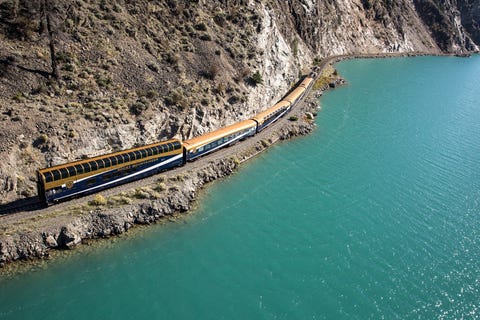
2The Rocky Mountaineer train travelling along the Seton Lake


ROCKY MOUNTAINEER

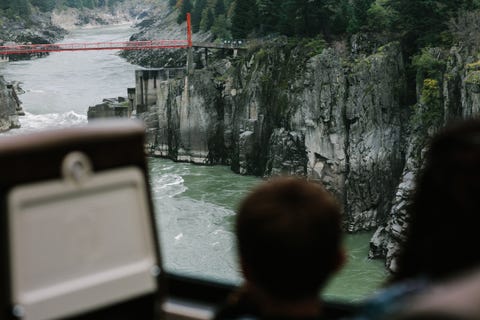
3. Hell's Gate seen from the Rocky Mountaineer train


ROCKY MOUNTAINEER

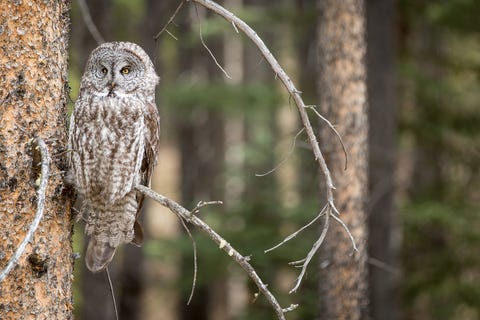
4. An owl perched on a tree branch


ROCKY MOUNTAINEER

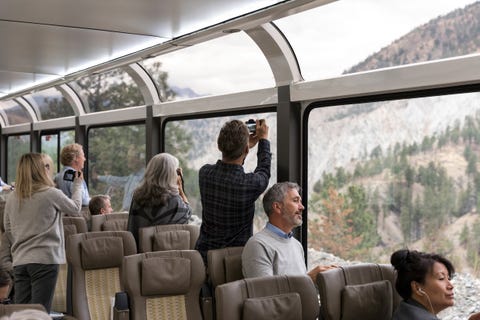
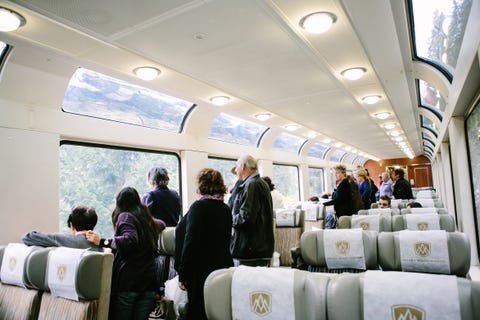
5. Travellers taking photos of the scenery in a SilverLeaf carriage


ROCKY MOUNTAINEER

6. A couple enjoying the view from a GoldLeaf outdoor viewing platform


ROCKY MOUNTAINEER

7. A couple taking photos from a GoldLeaf dome


ROCKY MOUNTAINEER

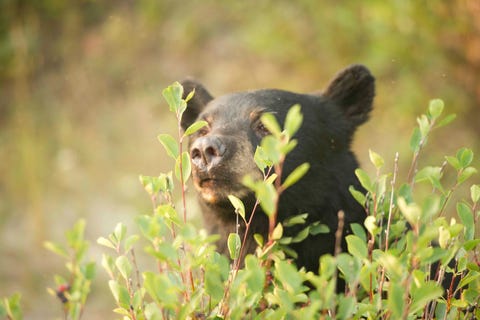
8. A black bear in the bushes


ROCKY MOUNTAINEER

9. A couple taking photos from a GoldLeaf dome


ROCKY MOUNTAINEER

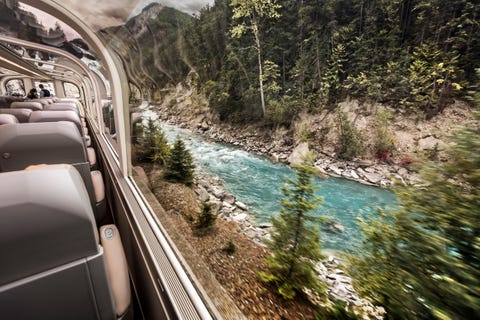
10. View from a GoldLeaf carriage


ROCKY MOUNTAINEER

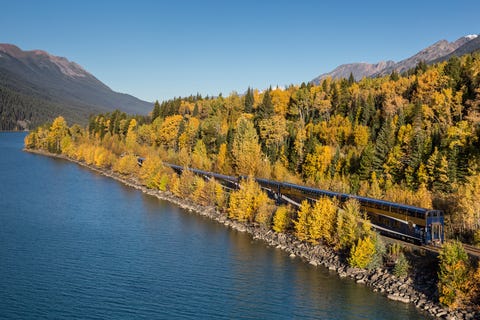
11. Rocky Mountaineer train travelling past Moose Lake


ROCKY MOUNTAINEER

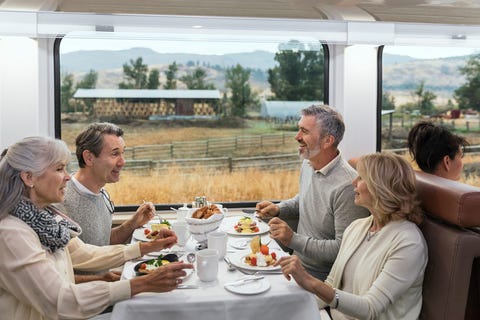
12. Couples enjoying breakfast together in a GoldLeaf dining room


ROCKY MOUNTAINEER

13. A traveller taking a photo from a GoldLeaf outdoor viewing platform


ROCKY MOUNTAINEER

14. An onboard Host storytelling in a SilverLeaf carriage


ROCKY MOUNTAINEER

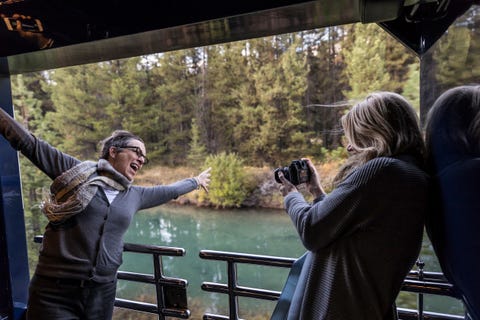
15. Friends taking photos from a GoldLeaf outdoor viewing platform


ROCKY MOUNTAINEER

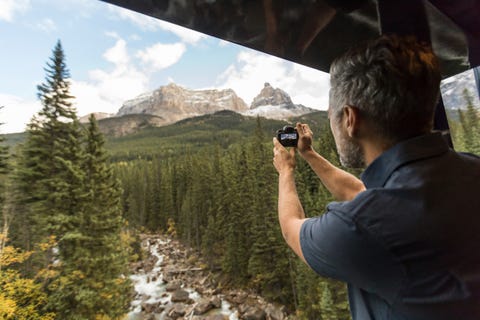
16. A man taking a photo of the scenery from a GoldLeaf outdoor viewing platform


ROCKY MOUNTAINEER

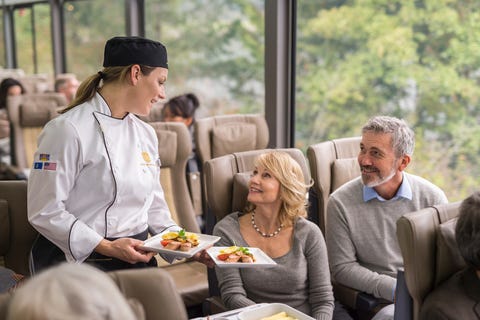
17. A chef serving breakfast seatside in a SilverLeaf carriage


ROCKY MOUNTAINEER

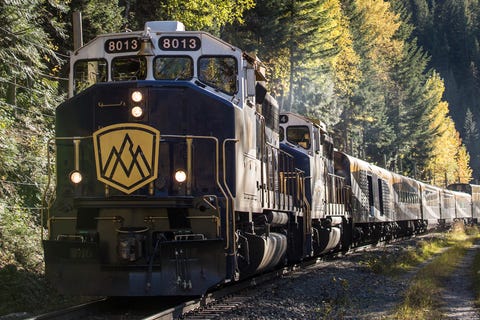
18. The Rocky Mountaineer train travelling through forests


ROCKY MOUNTAINEER

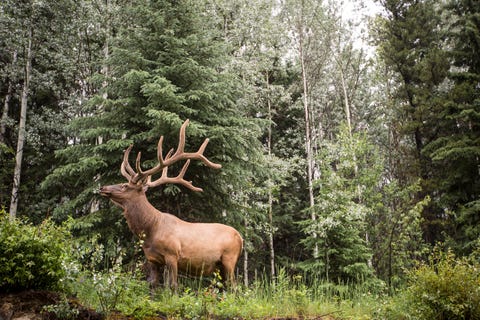
19. A elk seen in the forest


ROCKY MOUNTAINEER

20. Two guests socialising over a glass of wine in a SilverLeaf carriage


ROCKY MOUNTAINEER

21. Travellers taking in the scenery in a SilverLeaf dome


ROCKY MOUNTAINEER

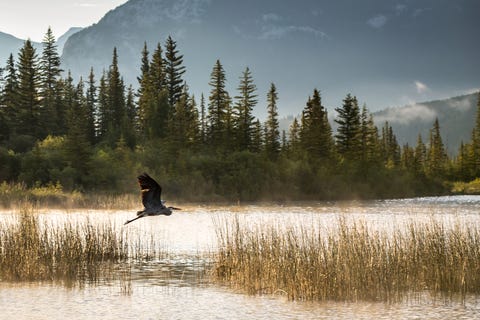
22. A heron flying over a lake


ROCKY MOUNTAINEER

23. A traveller looking outside from a GoldLeaf dome


ROCKY MOUNTAINEER
Con Son-Kiep Bac: Land of Vietnam’s revered figures

Con Son-Kiep Bac: Land of Vietnam’s revered figures

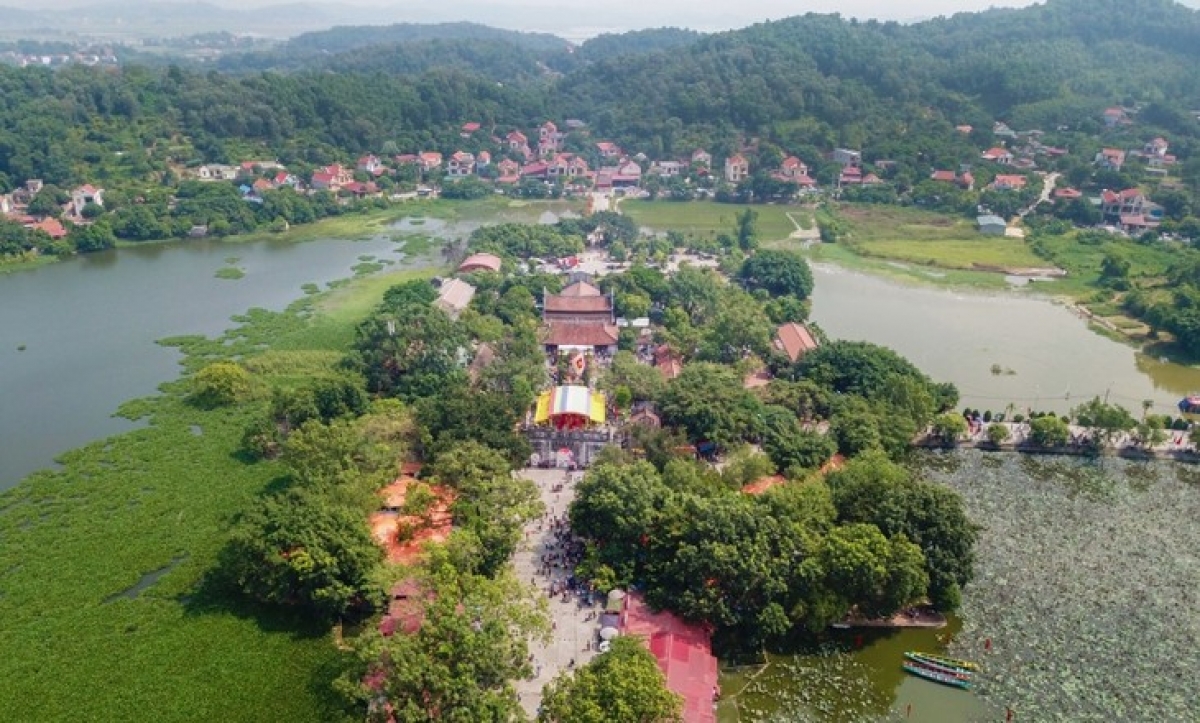
 The Con Son-Kiep Bac special national relic, which stretches over 8,000 hectares in eight communes in Hai Duong province, honors a page of Vietnam’s history.


Kiep Bac temple worships General Tran Hung Dao


The area is entwined with the life and career of the great military commander Tran Hung Dao and Nguyen Trai, the Great Man of Culture.

Van Kiep harbor and Luc Dau river were the site of three superb victories by Vietnamese armies commanded by General Tran Hung Dao over Mongol invaders in the 13th century.

“After his first triumph in 1258, General Tran Hung Dao built a military base at Kiep Bac, where he thought foreign troops would gather and prepare to attack Thang Long, the capital city," said Historian Tang Ba Hoang.

"Kiep Bac, located at the junction of six rivers, was a gateway to Thang Long, the delta, and the sea, which meant it was a strategic location for either advance or retreat. It was a single night’s journey by boat from Kiep Bac to Thang Long. During the second and third Vietnam-Mongol wars, Kiep Bac was a key battle field, where Vietnamese troops fought tenaciously and won”.

Tran Hung Dao died in 1300. He was awarded numerous titles of honor and respected by Vietnamese people as a saint for the enormous contributions he made.

Con Son, the other part of the Con Son-Kiep Bac special national relic, was a center of the Truc Lam Zen Buddhist sect founded by King Tran Nhan Tong in the 13th century. King Tran Nhan Tong and his two successors were called the three patriarchs of Truc Lam Zen Buddhism. The last successor Huyen Quang managed the Con Son pagoda until his final breath.

Nguyen Van Cuong, deputy chief of the management board at the Con Son-Kiep Bac special national relic, said Con Son pagoda safeguards 16 steles made during the Tran Due Tong reign in the late 14th century. They were recognized as national treasures in 2015.

"There are also 12 steles erected during the Le dynasty in the 17th-18th century and the Nguyen dynasty, the last Vietnamese dynasty," said Cuong. "They embody the great cultural values of Con Son, which often hosted pilgrimages by kings and national worshiping ceremonies to pray for peace, wealth, and prosperity”.  

The Con Son-Kiep Bac national relic stretches eight communes in Chi Linh city, Hai Duong province.

The Con Son-Kiep Bac national relic stretches eight communes in Chi Linh city, Hai Duong province.


The Con Son-Kiep Bac national relic has many historical and spiritual points of interest, including a pagoda that honors Nguyen Trai, one of Vietnam’s most prolific poets and writers, who chose to live at Con Son after abandoning his political career as a result of a false conviction. His writings vividly showcased his patriotism and genius.

Hai Duong, Quang Ninh, and Bac Giang province are working on a dossier to seek UNESCO recognition of the Con Son-Kiep Bac national relic as a world cultural heritage.

Trieu The Hung, Chairman of the Hai Duong provincial People’s Committee, said, “This dossier seeks the recognition of a combination of the Yen Tu complex and the Con Son-Kiep Bac relic site, which embodies the culture of the Tran dynasty and King Tran Nhan Tong’s Buddhist ideology.”

The Con Son-Kiep Bac historical relic hosts two annual festivals, one held in the spring to commemorate the death anniversary of Truc Lam Zen Buddhism patriarchs and the other held in autumn to commemorate Nguyen Trai and Tran Hung Dao.

Source: VOV5

Five-colour sticky rice of the Lu people

Five-colour sticky rice of the Lu people

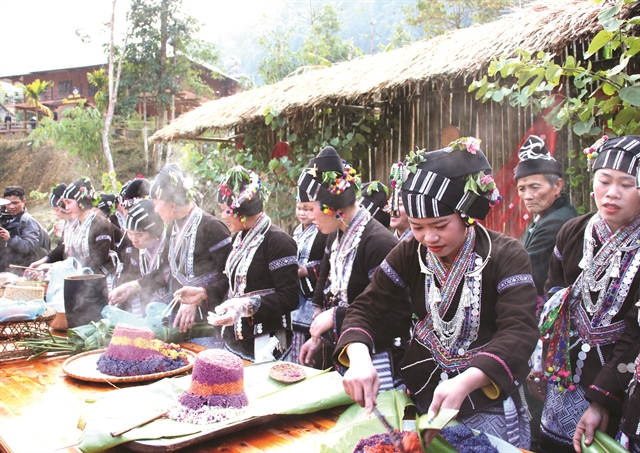
 An indispensable dish found at every festive event of the Lự ethnic people in the northern province of Lai Chau is five-colour sticky rice. 


The five-colour sticky rice has attractive flavour and colours. Photodulich24.com.vn

The recipe has been preserved by the Lự people through generations and has become a part of their unique cultural identity.

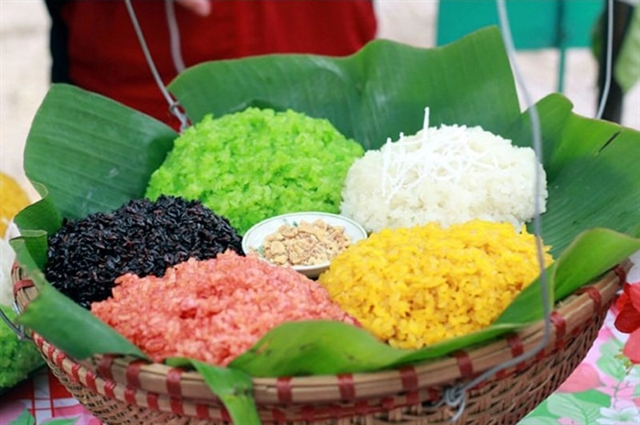
Wild edible plants are used to colour the rice. The red colour is created from gấc fruit, green from leaves of ginger or pineapple, yellow from pounded old turmeric roots and purple from the magenta plant; white is the original colour of the sticky rice.

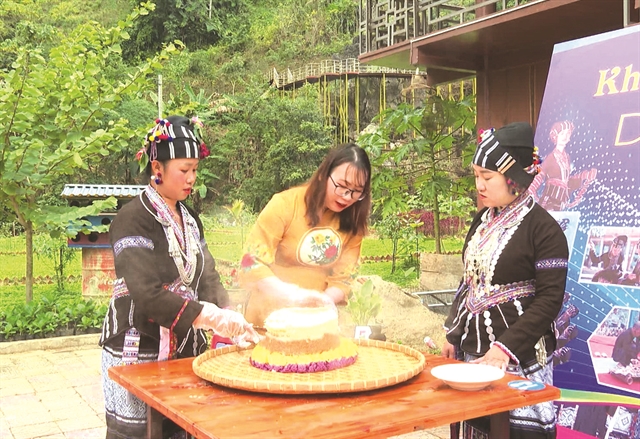
Steamed sticky rice of five different colours are layered on top of each other. VNA/VNS Photo Đinh Thùy

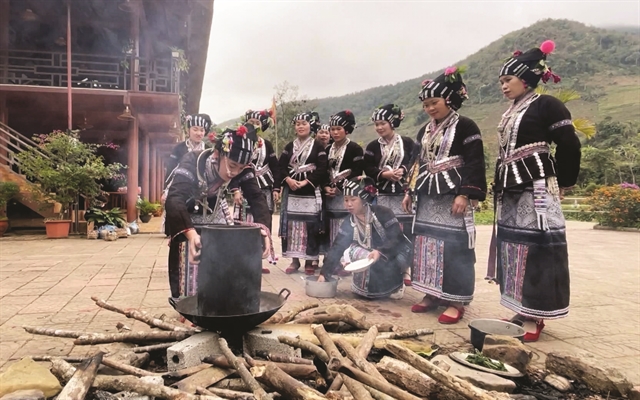
According to Lò Thị Pầu from Thẳm Village, every Lự family grows the plants to make the sticky rice around their houses. Actually cooking the rice is pretty simple and similar to other kinds of sticky rice. 

“Before being dyed, the rice must be soaked in cold water for six to eight hours and divided into five equal parts, enough to make each colour.

“The most difficult step is cooking and pounding the leaves and tubers to get the coloured juices. To ensure that the colours are beautiful, the cook must avoid mixing the plants together and must cook them in different pots,” she said.

After that, the sticky rice is steamed. The success of the dish is hinged on this moment and is dictated by the skill and experience of each cook.

“The sticky rice is dyed with colours created from natural plants and steamed with pure spring water. This makes it very fragrant and gives it the typical taste of the mountains where the plants are grown,” Pầu said.


Five colour sticky rice is an integral part of Lựculture.VNA/VNS Photo Đinh Thùy

To Lự people, each colour, white, purple, blue, yellow and red, has a different meaning. The red sticky rice symbolises the desire to live and dreams of a bright future, purple represents a rich land, yellow represents prosperity and a wish for a peaceful life, green represents the colours of the mountains and forests and white symbolises family loyalty and love for parents.

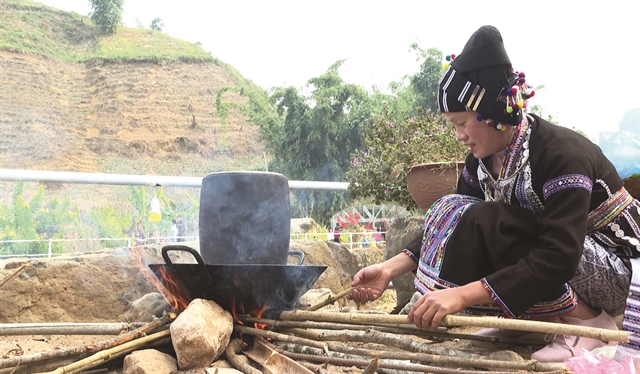
A Lự woman tends to a pot of sticky rice. VNA/VNS Photo Đinh Thùy

As well being as an integral part of the ethnic group in every festive and spiritual event, such as weddings or funerals, five-colour sticky rice has also become a treat that impresses visitors, thanks to its deliciousness and eye-catching colours.

“It is very interesting to witness Lự people make five-colour sticky rice. The dish is truly tasty and fragrant, completely different from other dishes I have tried before,” said Tạ Ngọc Lâm, a tourist from the northern province of Phú Thọ. VNS

For the Lự people, each colour has a different meaning, conveying wishes for a peaceful life, brighter future and love for their parents. VNA/VNS Photo Đinh Thùy

Source: VNS

Indulging in nature at Duong Coc Lake

Indulging in nature at Duong Coc Lake

 Duong Coc Lake is not only a reservoir supplying irrigation water to the northern province of Thanh Hoa but also a tourist attraction where travelers can indulge in nature.


Duong Coc Lake is located in Dien Ha Commune, Ba Thuoc District, around 100 kilometers from the province’s Thanh Hoa City. Weary travelers who travel hours to get to the destination are rewarded by a charming view of the lake surrounded by mountains.

The location used to be a field in a valley lying between Den and Ne villages. It was then turned into Duong Coc Reservoir that receives water from the Den Mountain stream and groundwater. The 50-hectare lake has a maximum depth of more than 40 meters. Several small islets in the middle of the lake are filled with lush green vegetation.

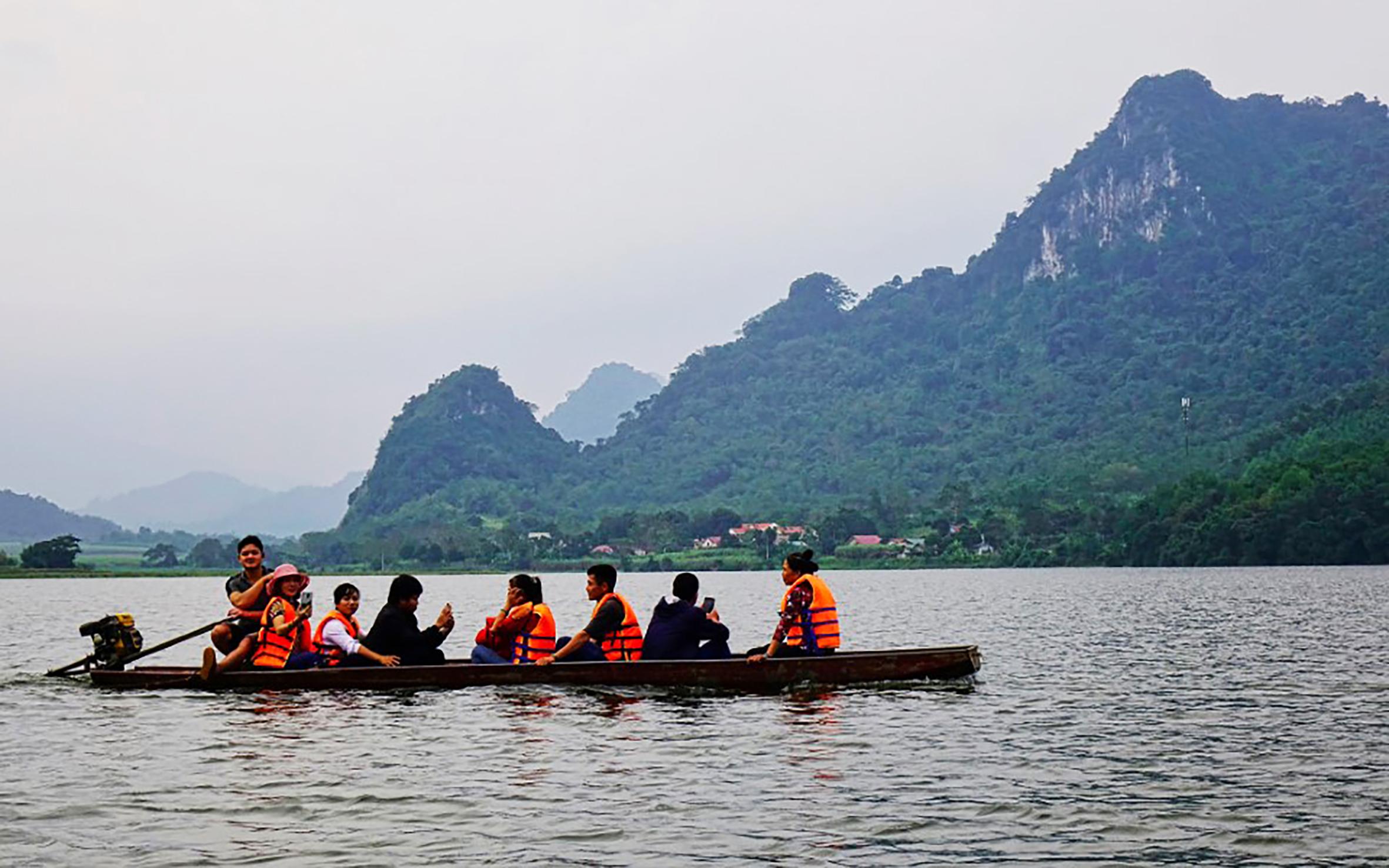
A boat trip on the lake is a must-try, during which travelers can enjoy the blowing breeze and peaceful scenery. They can witness a beautiful sunset view, the last sunrays of the day shining through white clouds covering mountain peaks, forest canopies and the lake surface.

Travelers enjoy a boat trip around Duong Coc Lake


Travelers can also opt for overnight camping by the lake, and order dinner featuring specialties of the Muong ethnic people. These can be ordered from the Muong families living nearby. The Dien family is among them. The delicious scent of grilled fish and chicken cooked by Dien’s daughter, who is a great cook, is hard to resist. She is friendly and loves talking to guests while dishing out the specialties.

All the dishes are displayed on a long table covered by a big banana leaf. It’s the Muong people’s style, the daughter says.

Nights at Duong Coc Lake are often bustling as groups of campers gather around their tents and enjoy the local specialties by the lake. The following morning, they admire the sunrise while drinking a cup of hot coffee.

A weekend trip to Duong Coc Lake may be just the way to recharge yourself to prepare for the week ahead.

Source: Saigon Times

“Dance to Heaven” by Co Tu ethnic minority people

“Dance to Heaven” by Co Tu ethnic minority people

 Co Tu ethnic minority people have preserved and promoted their unique traditional cultural and spiritual values, including their “dance to Heaven”.

This dance is for both men and women of the Co Tu ethnic minority group. The movements simulate both the working and daily life activities of the local people, such as harvesting rice, catching fish and hunting animals.

The dance has often been performed in major festivals of Co Tu people, including the buffalo stabbing festival, the ceremony to celebrate a new crop season, village building festival, and Guol house building festival. It has been considered as a way to connect with the heaven, their ancestors and gods.


The dancing group is led by the village patriarch, followed by men and boys.

The dance of rice harvesting

The high-pitched howl of the village patriarch expresses his strength and augustness.

Young men stimulate hunting activities.

Co Tu men and women perform the “dance to Heaven”.

Source: Nhan Dan

Traveling to Tra Su forest - An Giang

Traveling to Tra Su forest - An Giang

 Located in Van Giao Commune of Tinh Bien District in An Giang Province, Tra Su Cajeput Forest covers an area of 845ha, belonging to the national specialized forest system in the western region in Southern Vietnam. It is an ideal place for researchers and those who love wild animals.

Prior to 1975, the local natural forests were destroyed by the enemy’s bombs and became uncultivated areas. After the war, authorities in An Giang Province invested to reforest cajeput and build a 12km long, 4m wide and 4m high dyke system that helps prevent the area from being swamped during flood season.


According to Tran Ngoc Rang, Head of the Tra Su Cajuput Forest Management Board, at present, cajuput from 5 to 25 years old are planted in the 713ha forest. With its ecosystem, the cajuput forest will become a cradle to create the food source for many animals, particularly species of birds.


Here, there are 140 specified floral varieties with 22 varieties of trees, 25 varieties of shrubs, 10 varieties of vines, 70 varieties of grasses, 13 species of aquatic plants, 22 varieties of ornamental plants, 9 varieties of fruit trees and particularly many varieties of medicinal herbs of high value, 11 species of beasts belonging to 6 families and 4 orders, 70 species of birds belonging to 3 families and 13 orders, 2 rare and precious varieties of birds, including  Giang sen (Mycteria Leucocephala) and Dieng dieng (Anhiga melanogaster), 20 species of reptiles, 5 species of amphibians and 23 species of fish, including Ca com (Chitala ornata) and Tre trang (Clarias batrachus) having the scientific value and being in danger of extinction.


Tran Ngoc Rang said that in the coming time the management board will build a 10-15ha area to raise wild animals with the aim of developing the area into a garden with animals and plants of the flooded ecosystem in service of education, research and ecotourism.


Since 1999 the forest has attracted tourists. However it wasn't until 2005 tourism activities officially took place. The Province invested 18 billion VND in building infrastructure to serve the management and protection of the forest. Visiting the area, tourists will have a chance to behold the beauty of the forest with the remaining vestiges of rivers, canals, etc., and relax among wild nature for Vietnam travel.


Apart from the significance of preservation and economic value, the area also boasts many unique cultural features as it  is the home of the Kh’mer and Kinh people who practice several traditional handicrafts, such as brocade weaving, silk weaving, cooking Thot not (Borassus flabellifer) sugar, distilling cajuput essential oil, raising bees for honey, etc.

With its beautiful scenery and ecological value, the Tra Su cajuput forest annually attracts over 10,000 domestic and foreign tourists and researchers.

Marvel at the beauty of Tra Su cajuput forest

Marvel at the beauty of Tra Su cajuput forest

 Coming to Tra Su cajuput forest, tourists will have a chance to enjoy precious moments living in harmony with nature as well as the wholesome atmosphere.

To get to Tra Su forest, first go to Chau Doc Town in An Giang Province and take a motorbike taxi or grab a taxi and travel 17 kilometers to Tinh Bien District’s Nha Ban Town. It located in  an inland area near the Cambodian border.


It includes a 845ha special-purpose forest surrounded by a 645ha buffer zone. The forest has 106 colonies of water birds, bats and various rare and endangered animals and reptiles and a few of them have been listed in the Red Book, and over 140 flora species. Standing on a 10m high watch tower in the midst of the forest, tourists in Vietnam travel can enjoy a panorama of the vast greenery spotted with the white of storks below. Turtles, snakes, as well as other reptiles and freshwater fishes are also abundant in the canals. The colour of the waterways changed from one place to another, sometimes turquoise and at other times silver, purple or amber, due to the numerous species of water creatures. 


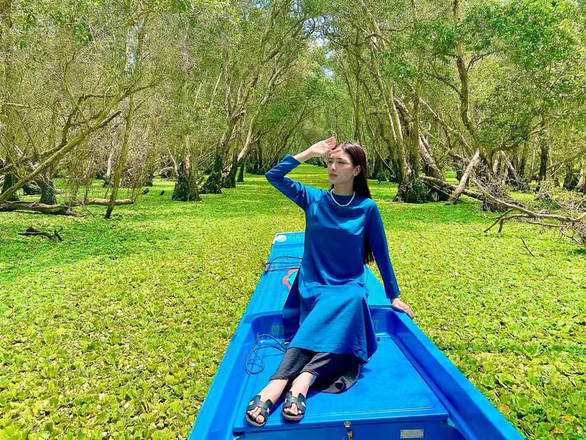
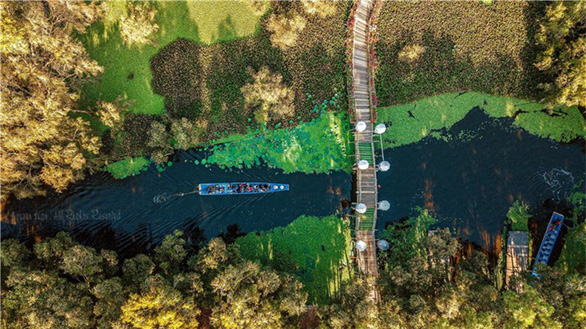
Rowing along the green mysterious canals is a particularly good ideal. Tourists in Vietnam travel can view the lovely landscape as the scenery drifts along both river banks, enjoy the fresh air as well as listen to the magical music as performed by the birds of the forest and other jungle insects and animals. The tourists will also see the wonderful countryside and farmers busily attending to their paddies, orchards and so on, but still happy to stop for a chat with guests. 


During the high water season, the forest's canals and streams are dense with clusters of water ferns, a particularly vivid sight when the setting sun imparts a golden glow on the emerald-green duckweed that blankets the water's surface.  Tourists in Vietnam travel can smell the perfume of lotus flowers and water lilies... 


Beside the significance of preservation and economic value, Tra Su also boasts many unique cultural features as it is the home of the Kh'mer and Kinh people who practice several traditional handicrafts, such as brocade weaving, silk weaving, cooking Thot not (Borassus flabellifer) sugar, distilling cajuput essential oil, raising bees for honey, etc. 


Making tours in Vietnam and  witness a serene but lively scene in Tra Su cajuput forest,tourists in Vietnam trave will have an unforgettable trip.