Hiển thị các bài đăng có nhãn India. Hiển thị tất cả bài đăng

Thứ Năm, 23 tháng 12, 2021

Vietnam's train is in the top 6 for Asian railway experiences

Vietnam's train is in the top 6 for Asian railway experiences

Vietnam's luxury train The Vietage is one of the best train routes in Asia for culinary experiences, cultural explorations, and natural landscapes admiration.

You may also like:

American Express Company (USA) conducted the Global Travel Trends survey in 2021 with 8,000 travelers worldwide. According to survey results, 68% of visitors expressed interest in sustainable tourism. 78% of people said they were looking for travel experiences to relieve stress. In addition, 61% of them want to take longer and more leisurely trips than before.

CNN suggests a train journey to discover Asia could be an interesting option for travelers in 2022.

The Vietage, Vietnam

The 1,700 km long Reunification Railway connecting Ho Chi Minh City with Hanoi is a train journey known to many domestic and foreign tourists. With 30 hours by train, visitors can admire the beautiful natural scenery at Hai Van Pass, Lang Co beach and rice fields...

However, this route does not have trains that offer high-class amenities. Therefore, travelers who want a more comfortable experience can choose The Vietage, a unit that provides luxury train service.

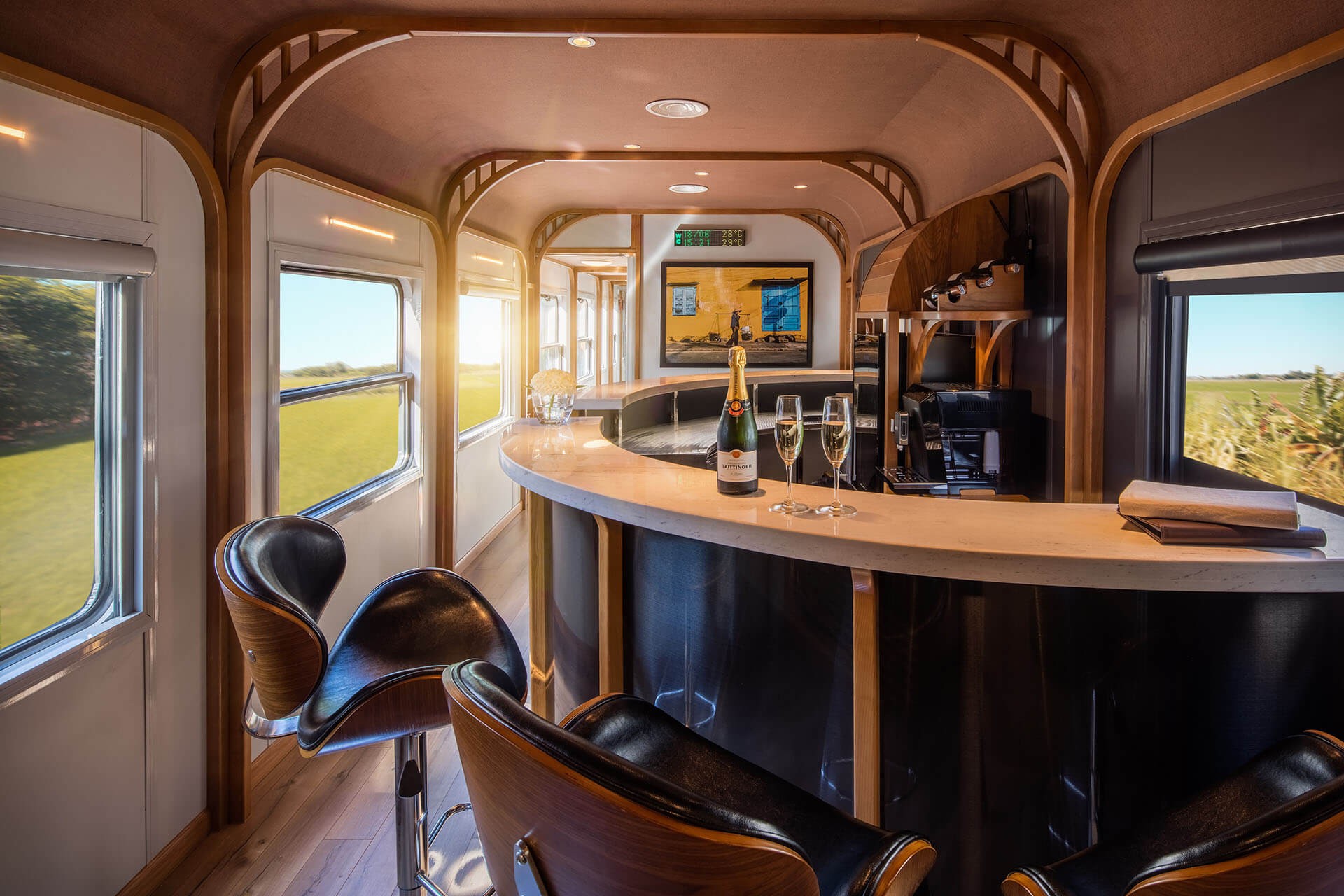
Opened in 2020, the train lasts 6 hours, carrying no more than 12 passengers, experiencing the journey across the Central region, from Da Nang to Quy Nhon.

The train carried only 12 passengers on a 6-hour journey through the central provinces of Vietnam. Photo: The Vietage.

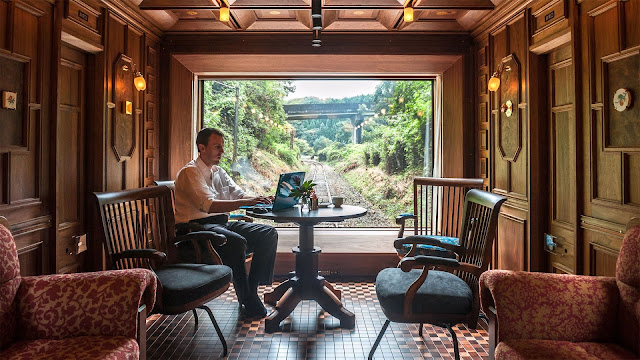
The space inside the train includes a luxurious interior with marble tables, large windows and private service counters, evoking the romance of classic rail travel. Visitors can experience this train for $350 per person one way. The ticket also includes a 3-course French meal, complimentary wine and beer, plus massage services.

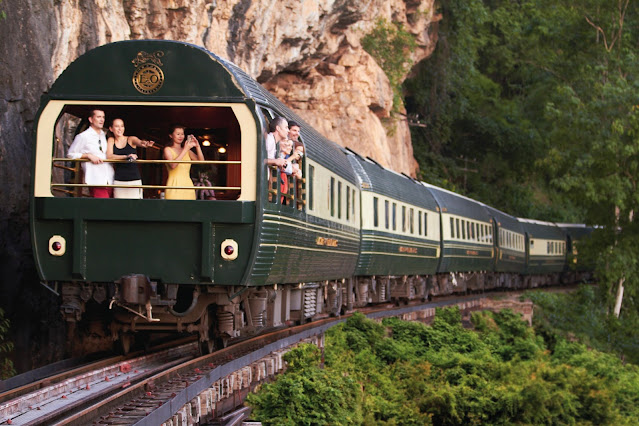
Belmond Eastern and Oriental Express, Bangkok (Thailand) to Singapore

The Orient Express is a romantic long-distance train route between Paris (France) and Istanbul (Turkey), running since 1883. After this train stopped working in 2009, the Belmond hotel group bought the carriages back and built a trip route in Asia called the Eastern and Oriental Express.

This train has a 4-day journey from Bangkok to Singapore with stops at River Kwai, Kanchanaburi (Thailand) and Kuala Lumpur (Malaysia).

Bringing the feeling of a mobile hotel, guests can experience high-class cuisine, enjoy the scenery through the large windows or the observation car behind the train. Besides, afternoon teas, cocktail hour with live music and luxurious dinners, evoke the romance of the original Oriental Express train.
Belmond Eastern and Oriental Express passengers enjoy a premium experience. Photo: Emporium Travel.
The journey also weaves many cultural experiences. The day before, passengers were admiring the Peranakan architecture in George Town (Malaysia). The next day, they can experience growing bananas or cycling through the rice fields of Thailand.

Seven Stars, Kyushu, Japan

Unlike Japan's famous bullet trains, Seven Stars has a slower speed, gently gliding through the 7 prefectures of the Kyushu region so passengers can enjoy peaceful mountain and ocean views.

Seven Stars train is wine red, has 12 suites in 5 carriages, serving up to 26 passengers per journey. With a distinctive Japanese style, the ship is like a living museum of art and tradition with kumiko wood furniture, aritayaki porcelain...
The interior style of the Seven Stars is boldly Japanese. Photo: Jurriaan Teulings.

The island of Kyushu located in the southern part of Japan, hides its natural and cultural beauty. During the 4-day cruise of Seven Stars, visitors will enjoy hot spring baths in Beppu, stay at a 5-star ryokan (Japanese-style inn), learn about the local crafts of Oita city...

Sri Lanka Main Line, Kandy to Ella

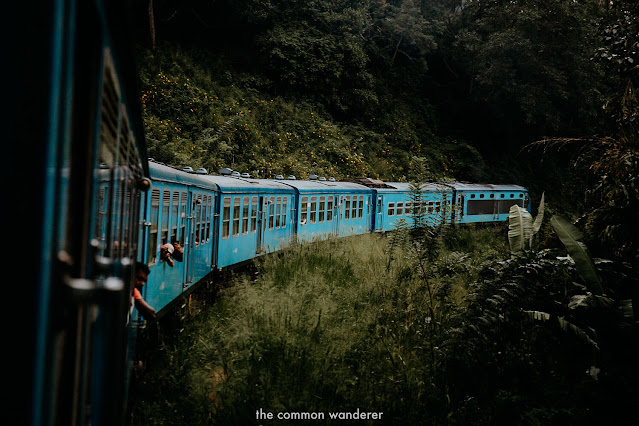
The train that connects the ancient kingdom of Kandy with the famous mountain village of Ella is a fascinating experience for visitors to Sri Lanka.

The first-class cabin on the blue ship has air conditioning and large windows to give passengers panoramic views of rolling hills, dense forests, stone bridges, cliffs and great estates. In the second and third class cabins, guests can feel the cool breeze through the windows.
The best way for tourists to explore the hilly areas of Sri Lanka is by train. Photo: The Common Wanderer.
Along the journey, street vendors jostle through the crowds, offering a range of local treats like samosas, scones and tea. The trip lasts 7-9 hours and the price ranges from 0.80-20 USD, depending on ticket class.

Palace on Wheels, Rajasthan, India

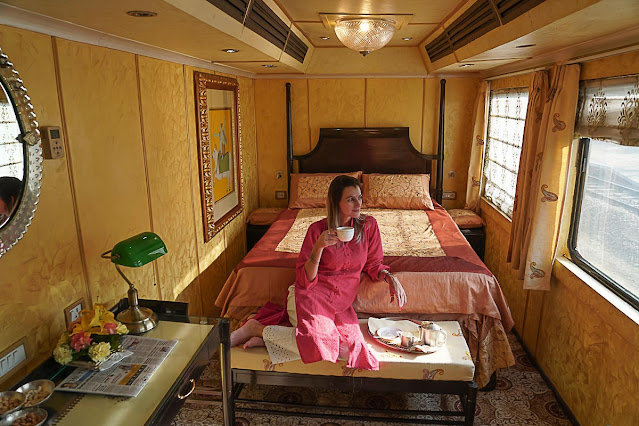
Palace on Wheels is a luxury cruise train that runs throughout the Northern states of India, providing a rare experience for visitors. Launched in 1982, the train was refurbished and returned to service in August 2009 with a new decor, itinerary and cuisine.

The carriages have regal interiors such as chandeliers, oil paintings, handicrafts, fine silverware... Most cabins have 2 single beds, while the Super Deluxe cabins are equipped with queen size beds. The train also has a common area consisting of 2 dedicated dining cars, a Royal spa, bar and lobby offering a luxurious experience.
The Palace on Wheels train offers an 8-day exploration of Northern India. Photo: Mike Bibby.

Operating from September to April every year, this eight-day rail journey begins in Delhi and travels to northwest India, home to historic forts, palaces, markets, world heritage sites recognized by UNESCO and extensive national parks.

The train has been suspended since March 2020 due to Covid-19, but is expected to undergo a large-scale renovation in May 2022 and return to regular operation in September 2022.

Alishan Forest Railway, Central Taiwan

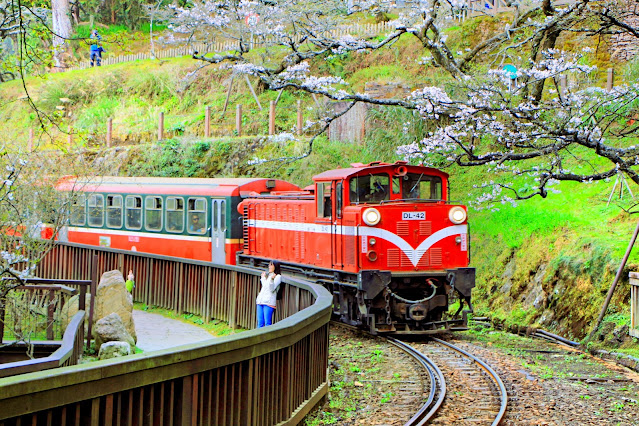
Rail journeys have long been a trademark in Taiwan (China), which has a beautiful blend of forest, mountain and ocean landscapes. One of the most beautiful routes here is the centuries-old Alishan Forest Railway. The transport route was originally used by the logging industry but was reactivated as a tourist experience in 1933.

Historic diesel locomotives run from Chiayi City to the mountains of Alishan, home to the highest station on the island. During the 3-hour journey, passengers will pass through more than 50 tunnels, 75 bridges and various natural areas, from rivers and waterfalls to dense cypress forests, misty mountain peaks...
Alishan Forest Railway goes to Taiwan's highest train station. Photo: Trip.com.

Thứ Tư, 11 tháng 8, 2021

9 temples located in the most dangerous locations in the world

9 temples located in the most dangerous locations in the world

These amazingly beautiful temples are not only distinguished by their unique architecture, but are also very famous because they were built in extremely difficult locations, which are difficult to access.

You may also like:

Chinese Hanging Temple

Hanging Temple is located on a very craggy cliff face. Experts believe that the structures on Mount Heng in Shaanxi, China, may be more than 1,500 years old. The entire building is held to the cliff by oak supports that are placed into holes punched in the rock face below. The whole complex has more than 40 halls and buildings. Interestingly, the three main religions of China, Taoism, Buddhism, and Confucianism, appear in the temple at the same time.

Visitors follow steps and paths hewn from rock leading up to the temple. The trails can be slippery from the rain and there is also the risk of falling rocks. The main support for the temple is in the rock cavity, so the oak piers do not bear the entire weight of the temple. The design has proven effective over the centuries, withstanding many strong earthquakes.

Paro Taktsang (Tiger's Nest), Tibet

Paro Taktsang or Tiger's Nest is a Buddhist temple complex in Bhutan, located on a cliff in the Paro valley. The temple is built around a series of caves where Padmasambhava, an Indian monk who spread Buddhism in the region in the 8th century, meditated during his time in Bhutan. The temple dates back to the 17th century. It surrounds a total of 13 caves.

There are strict rules about scheduling in advance and no photography inside the monastery, but visitors are welcome to visit if they have a guide and can do the round trip walking tour. The trail has wooden walkways and stone stairs in some sections. All the buildings inside the monastery are also connected by stone steps. In the valley below the temple, locals hold a traditional Bhutanese festival, called Tsechu, in honor of Padmasambhava every spring.

Meteora, Greece

Meteora, which means "between the sky", is a collection of rock formations in Greece. The picturesque natural spiers along with the cliff-top monasteries are the main attraction. Eastern Orthodox monks built the first monastery here in the 11th century, and more monks came over the next 300 years. This hard-to-reach location makes it the perfect place to hide from Turkish looters and military groups operating in the area. Monks have built up to two dozen temples, most of which can only be reached by rope ladders, and people will simply pull the ropes up when they sense danger.

Taung Kalat Monastery, Myanmar

Mount Popa is an extinct volcano in Myanmar. The mountain is only 1,524m high, but it seems to stand out more because it is surrounded by flat plains. Taung Kalat is a rock system on the slopes of Mount Popa, topped by a large temple located on the plateau. To get to the temple, visitors have to climb 777 steps. The temple has several shrines and offers views of the surrounding plains and mountains. You can even see Bagan's famous temple complex in the distance.

Sümela Monastery, Turkey

Located in northern Turkey near the Black Sea in the Pontic Mountains, Sümela Monastery is built into a cliff at an altitude of about 1,219m above sea level. The monastery is extremely ancient, it was founded by Greek Orthodox monks in 386, then expanded and renovated over the centuries. The original purpose of the temple's construction was to house religious symbols such as the painting of the Virgin Mary.

Phugtal Monastery, India

India's Phugtal Monastery is located in the autonomous region of the Himalayas, Ladakh, and can only be reached by foot. Like other prominent temples in the Himalayas, this one is built around a cave where Buddhist monks once meditated. According to legend, the first inhabitants of the cave were monks who studied directly under the Buddha. It is home to about 70 monks with a library of rare texts and many well-protected sacred sites. The temple has a honeycomb-like layout with different halls and buildings.

Saint Michel d'Aiguilhe, France

This chapel is located on top of an 85m high volcano, near the Loire River in the town of Le Puy-en-Velay, France. Visitors can only reach Saint Michel by climbing through 268 steps carved into the rock. The site was first built in the 10th century by a missionary named Bishop Godescalc, who had just returned from a pilgrimage to Spain. Inspired by the great mosques and cathedrals there, he decided to create a chapel in the most prominent place in town.

Pura Luhur Uluwatuk, Indonesia

Uluwatu means "stone at the end of the earth." This Hindu temple in Bali is perched on a beautiful cliff. The temple dates back to the 11th century, when a guru from the neighboring island of Java built it more than 60m above sea level. Today, Uluwatu is a tourist attraction and often hosts traditional Kecak Dance performances daily. It is open for Hindus to pray 24 hours a day and visitors can also view Uluwatu from afar.

Katskhi Pillar, Georgia

This monolith in Georgia is about 40m high. A small building sits on top of the rock. Experts believe it was a hermitage that someone built in the 8th, 9th or 10th century.

No one is sure how the builders accomplished this arduous undertaking. Although it is the source of many legends and has religious significance by the inhabitants of the surrounding river valley, the building itself has been abandoned for centuries.

Climbers first approached it in the 1940s. In the early 2000s, the Georgian government launched a renovation project aimed at restoring part of the hermitage.

That project allowed a monk to take up residence on top of the rock.


Thứ Hai, 5 tháng 10, 2020

 Root bridge series more than 500 years old

Root bridge series more than 500 years old

Sometimes bridges are not built by humans. They planted them for hundreds of years to turn them into a solid path.

You may also like:

Northeast India is one of the famous wet regions. On the slopes of the hills south of Khasi and Jaintia, the Indian rubber tree thrives. They have strong, vigorous roots. Secondary roots grow from the trunk, easily reaching the top of giant rocks along the riverbank. This plant is known as the red-multi bud (or multi-rubber).

War-Khasis and War-Jaintias are two tribes with an old relationship in the state of Meghalaya (Northeast India). They inherently notice the strong roots of the redbud banyan tree. The idea of turning them into bridges over the river, serving the living needs, was born.

According to the BBC, at first, the War-Khasis built bamboo bridges. However, extreme weather makes bamboo bridges unable to withstand the destructive power of storms. The birth of a tree root bridge changed their lives.

The people of Meghalaya have many ways to build bridges with the roots of banyan trees. Sometimes, they tie it up with their bare hands, twist it together, and wait for the roots to form the desired shape. According to tradition, the War-Khasis people started with planting trees on either side of the bank. They then thread and twist the roots around a temporary wooden bridge that leads to the side. When the roots grew to the other side, people planted it in the ground. Over time, the roots absorb nutrients, become stronger, and form strong bridges.

The time for root bridges to develop can be as long as 30 years. This depends on how people take care of the roots, the weather ... However, once they are strong enough, the tree root bridges can withstand the weight of more than 50 people. According to Atlas Obscura, in addition to their stability, the root bridges are also resilient. Some ancient bridges around Cherrapunji town are more than 500 years old.

Since the way the roots are shaped is different from scratch, these special bridges are quite varied in style. Some root bridges are 51 m long and 25 m high, spanning streams. Most are just a single bridge. However, some bridges have special stacking designs such as Umshiang that make many visitors curious. In the coming time, this bridge will probably "grow" another third floor.

However, the fate of the root bridges is probably about to come to an end. According to The Living Root Bridge Project, people in Meghalaya are tending to use modern materials such as metal to build bridges. The construction will be significantly faster than waiting for the roots of the multi-rubber tree to develop. Still, a number of others are working to maintain this identity.


Thứ Bảy, 29 tháng 8, 2020

 What countries are the most confident in opening doors to international visitors?

What countries are the most confident in opening doors to international visitors?

Indian and Thai people believe that their countries are ready to reopen the border to welcome international tourists. 

When suitcases covered full of dust, visitors all over the world are wondering themself when and how everything returns to as before Covid-19 arising that they can comfort going to their favorite places? And what countries are ready to welcome the returning of international visitors?

The result of an international survey named Unravel Travel recently announced on the confidence of countries in reopening their border to tourists. Therefore, India and Thailand are 2 countries ranked on top of the list, with 76 scores. 4/5 Thai people believe their country is good at preparing to welcome tourists. This is the country having the highest support in reopening the door to tourists as 93% of Thai people realized the importance of tourism to the local economy.  

Many travelers want to choose Thailand as the first destination to visit if the borders reopen.


This position is based on 2 factors: a comfortable level of people when traveling internationally within the next 12 months and they feel stable when their countries welcome tourists again.

Among the South East Asia countries, the land of the golden church has the most attraction to domestic. 91% of asked people want to support domestic tourism centers in the next 1 year. This is a positive sign when Thailand invested about 720 million USD to stimulate domestic tourism. 

Saurabh Sardana who takes responsibility for managing daily activities (COO) at Blackbox Research noted, building belief of travelers during the period of the pandemic is an important key. Thailand needs to take advantage of its success in controling disease to create that belief. At present, the infection rate in Thailand is at a low level. This country also has a strong community health system, playing an important role in managing conditions. So, this country is considered by many a believable destination regionally and internationally. 

The next names in the list are China (69 scores), Indonesia (65 scores), Singapore (64 scores). The last is Japan. The rising land people show caution with this idea, recording 40 scores. The next is the Philippines (43 scores). 

Western countries have scored lower than average level which are Sweden, England, Canada, USA... Although, Japan still the country that tops the list on destinations that Asia tourists want to call at the most after reopening the border. With Western tourists, the most desirable destination is Spain. 

44% of asked people still want to avoid international vacations. 32% of Japanese, 42% of the Philippines, 43% of New Zealand, and 52% of Australia agree with this opinion. 

Up to 80% of tourists are ready to pay more money to have a safety accommodation. 74% of people are ready to pay higher travel insurance in exchanging more comprehensive protection. 76% of the asked said they are favor to coming to remote, fewer people places. 66% of people want to travel in their own vehicle, 18% choose plane, 9% option taxi, and 7% prefer sitting on a bus or train. 

On future travel plans, 44% of tourists want to have boarding tickets online, 43% want to use the toilet without contacting in hand more. 63% of the asked people want to seat in a flight that has emptying middle seats. 

The survey was conducted by Blackbox Research (the leading social research organization in Singapore), Dynata (the online market research company in USD), and Language Connect (the top translation service providing agency in the world). It has 10.195 persons in 17 countries who participated in answering the survey.