Hiển thị các bài đăng có nhãn People. Hiển thị tất cả bài đăng

Chủ Nhật, 6 tháng 3, 2022

“Dance to Heaven” by Co Tu ethnic minority people

“Dance to Heaven” by Co Tu ethnic minority people

 Co Tu ethnic minority people have preserved and promoted their unique traditional cultural and spiritual values, including their “dance to Heaven”.

This dance is for both men and women of the Co Tu ethnic minority group. The movements simulate both the working and daily life activities of the local people, such as harvesting rice, catching fish and hunting animals.

The dance has often been performed in major festivals of Co Tu people, including the buffalo stabbing festival, the ceremony to celebrate a new crop season, village building festival, and Guol house building festival. It has been considered as a way to connect with the heaven, their ancestors and gods.


The dancing group is led by the village patriarch, followed by men and boys.

The dance of rice harvesting

The high-pitched howl of the village patriarch expresses his strength and augustness.

Young men stimulate hunting activities.

Co Tu men and women perform the “dance to Heaven”.

Source: Nhan Dan

Thứ Năm, 23 tháng 12, 2021

7 major clans in the tribe in Africa

7 major clans in the tribe in Africa

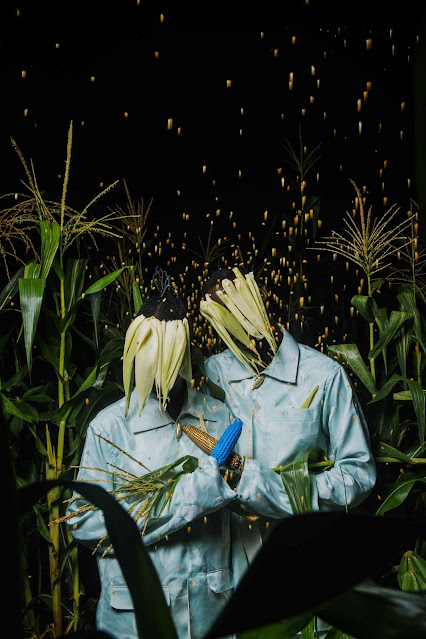
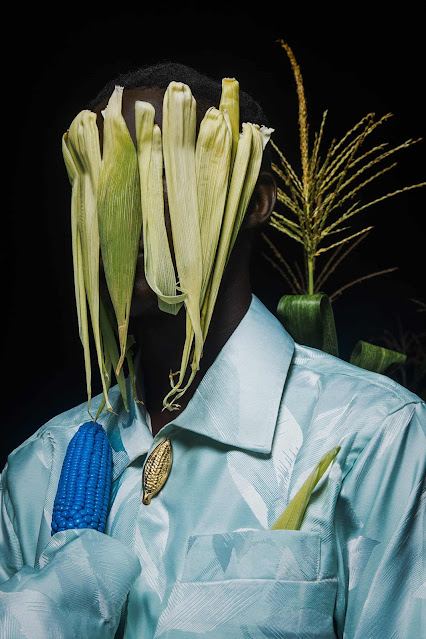
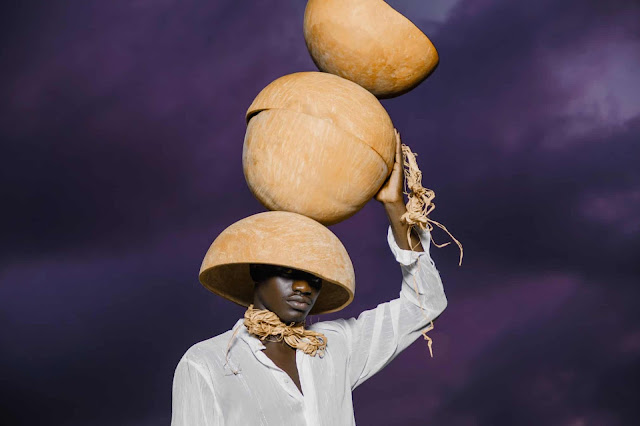
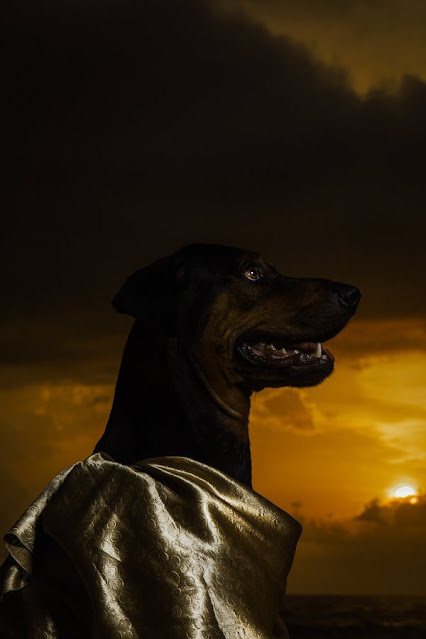
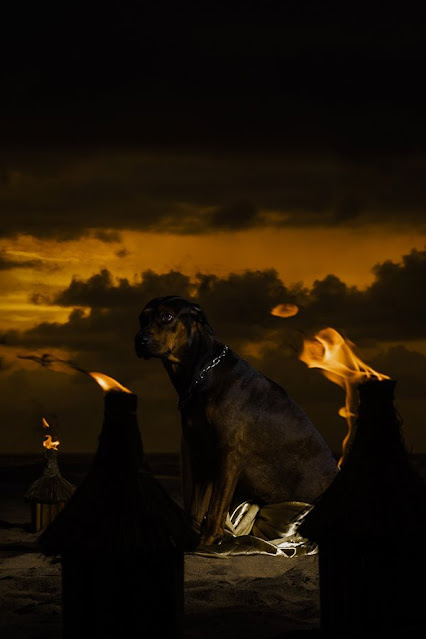
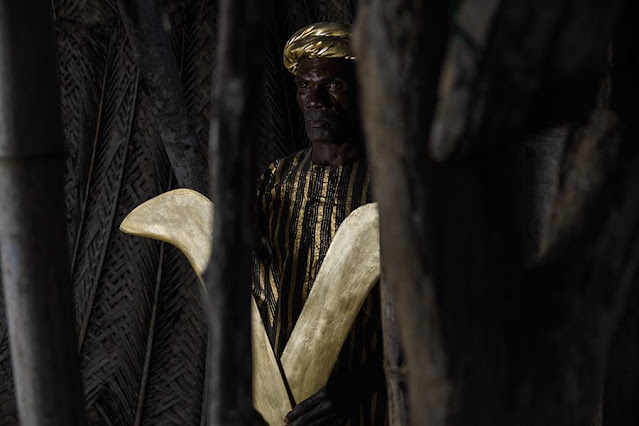
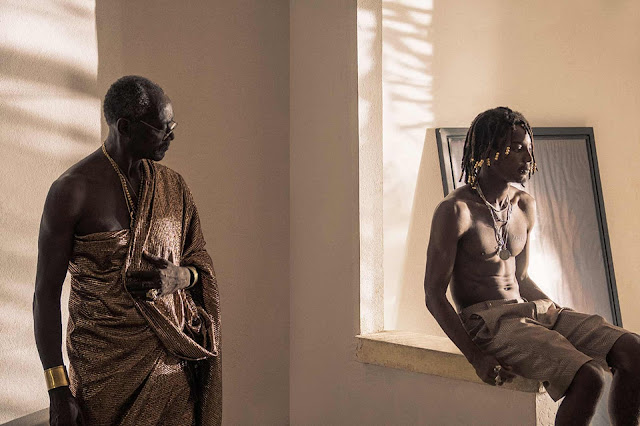
Nuits Balnéaires' series of photos depicts the story of the seven great clans of the N'zima Kotoko tribe through impressive visual art.

You may also like:

The series is named "The Power of Alliances". It highlights the importance of solidarity and shared values in Ivory Coast, a country slowly recovering from protracted political turmoil. Through the series of photographs, Nuits Balnéaires shows the centuries-old social structures and symbols of each family.


The Adahonlins use the palm and the parrot as symbols. They are excellent farmers and educators. The Adahonlins believe that a child's successful upbringing depends heavily on good nutrition. To them, palm kernels symbolize maturity, peace and cohesion. Meanwhile, the parrot is the image of thrift.


Corn is the symbol of the N'vavilé lineage. This is a clan famous for its great leaders and dancers. The N'vavilés were so close to the Mafolés that the two sides often held funerals together.

The symbols of the Alonhomba clan are raffia and calabash - representing dominion, courage and perseverance. Their motto is: The unhappiness of some makes others happy.


The clan of N'djua is symbolized by fire and the dog. Members of this clan are seen as the light, the key to the visible world. While fire brings warmth from people. Dogs represent affection and loyalty.

The clan of Ezohilé is seen as the king of kings. Their leaders ride elephants and walk on a white sheepskin rug. The Ezohilé people believe their symbol is water - the source of life. However, they don't think water is enough for survival. Therefore, the symbol of this clan also has crows, rice and cats.

The Mafolé takes gold and silver as its symbol. They are skilled gold diggers.

Thứ Sáu, 30 tháng 7, 2021

17 things about Cuba you may not know

17 things about Cuba you may not know

Cuba is an island nation located in the Caribbean area. Despite of its humility size, Cuba has a characteristic culture and will impress anyone who visits it. 17 things following here will unveil something that maybe you are still unknown.

You may also like:

Cuba is on everybody's lips lately. The country has seen huge tourism booms since the improvement of US-Cuba relations and relaxed travel laws. If it's on your wishlist, here are a few things that might surprise you about this beguiling country.

It has a huge population


Cuba is the most populated country in the Caribbean, with more than 11 million residents.

One country, two currencies


That’s right, Cuba has not one but two currencies. The Cuban peso (CUP) and the Cuban convertible peso (CUC) are both legal tender on the island, with the latter worth 25 times as much as the CUP. While most Cubans are paid in CUP, nearly all goods are priced in CUC.

The island has a nickname


Cuba is often referred to as El Caiman or El Cocodrilo (Spanish for alligator) on account of its shape when seen from above.

It's the home of rum


Bacardi, the spirit maker of rum, Dewar’s Scotch and Grey Vodka, was actually founded in Cuba. However, the brand moved its operations to Puerto Rico after Fidel Castro came to power.

Hemingway found his inspiration there


Ernest Hemingway wrote For Whom The Bell Tolls and The Old Man and the Sea while he lived in Cuba. He often stayed at the Hotel Ambos Mundos in La Habana (pictured).

There was no Christmas in Cuba


Christmas did not become an official holiday in Cuba until 1997. This was introduced by former leader Fidel Castro as a gesture of goodwill in honour of Pope John Paul II’s visit.

Cuba breeds doctors


There are so many doctors in Cuba they’re often sent to other countries that have a shortage. The country has 90,000 of them to serve its population of 11 million. That's eight for every 1,000 citizens – which according to the World Bank is more than double the rate in the US (2.5) and the UK (2.7).

There's top notch healthcare


In Cuba healthcare is free and seen as a fundamental human right, guaranteed by the state. Despite spending a fraction of what the United States spends on healthcare (the World Bank reports Cuba spends $431 per head per year compared with $8,553 in the US) Cuba has a lower infant mortality rate than the US and a similar life expectancy.

Hitchhiking is easy and legal


Forget buses, lots of Cubans engage in the nationalised hitchhiking system which came about in the 1990s. At the time buses were scarce and it was illegal to buy cars, so the government made it mandatory for government vehicles to pick up hitchhikers.

There are lots of cool vintage cars


One of Cuba’s most distinctive anachronisms has always been streets full of classic cars like Chevrolets, Buicks and Fords. Why? Because up until 2014 it was forbidden to purchase cars manufactured abroad.


Monopoly has been banned


It’s said that when Fidel Castro seized power in Cuba, he immediately ordered all sets of the game Monopoly to be destroyed.

They burn dolls at New Year


On New Year’s Eve, it’s tradition for Cubans to burn dolls in order to symbolise forgetting bad times and looking forward to new and good times during the New Year.

It's all about ballet and baseball


Two of the nation’s biggest passions are baseball and ballet. The latter is funded by the government, which pays for ballet training and subsidies tickets to performances.

Some soft drinks are banned


Cuba is one of two countries where the sale of Coca-Cola is prohibited. Although it was one of the first countries outside the US to receive its own bottling plant in 1906, when the Castro government began seizing private companies in the 1960s Coke made a swift exit, with not a drop being served in the country since.

Unusual etiquette


Blowing your nose in public in Cuba is considered extremely rude.

Cubans aren't having enough kids


The country has one of the lowest birth rates in the Western Hemisphere. Falling dramatically since the 1970s, in 2013 only 9.51 babies per 1,000 Cubans were born.

Taking pictures can be illegal


While reports vary on whether it’s actually illegal or not, taking photos of anything associated with the police or military is certainly frowned upon and could result in you losing your camera.

Thứ Bảy, 23 tháng 1, 2021

A backpacker take a long trip from Shanghai to Newcastle by bicycle

A backpacker take a long trip from Shanghai to Newcastle by bicycle

Josh Reid said the greatest lesson during the journey is to believe in strangers and accepting their kindness. The British backpacker spends 4 months riding a bike from Shanghai (China) to Newcastle (Britain).

You may also like:

Josh Reid (right) had to receive a bicycle at a manufacturing factory in Shanghai, China

 Having a passion for bicycle since a child, Josh Reid, 23 years old, completed his journey unbelievably: riding a bike from China to Britain within 4 months with a distance of nearly 15.000 km and going through 15 countries. 

The story began as Josh Reid booked a new bike which was produced in China. He decided to take a flight to reach the manufacturer in Shanghai to receive the bike and then rode the bike return home. After released, the Giant Revolt with a carbon frame and tubeless tires took Josh Reid to beautiful landscapes and meet wonderful people in 15 countries, from Asia to Europe. 

A Chinese person stopped Rosh to sing an encouraging song to him. 

Josh Reid shared, the biggest lesson he has learned through the trip is to believe in strangers and accept their kindness. "Everyone is more friendly than what you imagine, even there is a barrier of language. I got help from many kind people during my journey, they provide me food and shelter."

In a village in Tajikistan, Josh Reid asked a passer-by about overnight accommodations. "He called to his friend and someone said their grandparent would take care of me. They welcome and invited me to use food without receiving my payment. This hospitality overwhelms all over Central Asia. I stayed in some mosques and houses of many people, including a bed in a roadside melon stall", said Josh. 

The Tajikistan people provided accommodation and food for Josh Reid.
A stall of the melon sale in Uzbekistan helped Josh an accommodation and got him to enjoy melon for free.

The luggage of Josh Reid is quite simple. He has a sleeping bag, having a capacity of stow and inflation to use in the night and another bag to contain clothes and some stuff. 

During the days riding the bicycle through the vast savanna of China, Josh Reid often rests in the sleeping bag on sideroad without the protection of canvas. Everyone was curious about the trip, so on the way, Josh Reid was invited to the house of many people for lunch. Many drivers of trucks, bikers met and chatted with Josh Reid along the way. 

The luggage of Josh Reid is quite simple. He used a sleeping bag and without the canvas tent. 

The journey of Josh Reid was inspired by a trip of his father - the journalist Carlton Reid did as a child. In the 1980s, Carlton Reid rode a bicycle from Israel and spent a year taking trips to deserts in the Middle East by mountain bike. 

"I have grown up with bikes and a father who has a passion for bikes. My first journey really by bicycle is a trip to Luxembourg along with my father as I am 7 years old. On the way returning home from Shanghai, I came back to some road I had biked 14 years ago. I have a photo taken me from a place after such many years", said Josh Reid.

Josh Reid rested on the highway of Pamir, Kyrgyzstan.

Josh Reid in the ancient city of Samarkand, Uzbekistan.

Rosh Reid used the equipment of satellite navigation to map out ways and locate directions, He chose routes convenient for visas. From Asia, Josh Reid went through Kyrgyzstan, Tajikistan, Uzbekistan. 

Due to not wanting to go through Iran, he boarded a ship across the Caspi sea, from Kazhakstan to Azerbaijan. Josh Reid was goodbye to Asia after leaving Georgia to Istanbul (Turkey). He continued to bicycle through Europe, to Amsterdam, IJmuiden (Netherlands) to board a ship across the North Sea, and came back home in Newcastle, United Kingdom. 

Josh said: "In the early days, I am overwhelmed because the journey is so long. But every time I press on pedals, you will see the goal is closer."

Josh met another friend in Kazakhstan. From here, he boarded a ship across the Caspi sea to Azerbaijan.


Josh Reid in Budapest, Hungary.

Thứ Hai, 21 tháng 12, 2020

The country has 13 Santa Clauss

The country has 13 Santa Clauss

Unlike in other countries, Icelanders believe that there are 13 Santa Clauss.

You may also like: 

People all over the world are too familiar with the image of Santa wearing a red shirt, white beard, and reindeer riding. In Iceland, Santa Claus isn't like that. Those are the Yule Lads, there are 13 in total. They are siblings, children of two terrifying giants Grýla and Leppalúði. According to legend, in the past, 13 Yule Lads was just as cruel and mean as his parents. They steal the people's belongings, make fun of children.

Over time, they became more benevolent and became happy people. Today, people in Iceland believe that the Yule Lads will give gifts to good kids in a shoe on the window shelf at night. On the contrary, spoiled children will only receive one potato.

Family of 13 Santa Clauss in Iceland. According to legend, Grýla and Leppalúði will capture the spoiled children and the giant couple's cat Yule will eat the people without new clothes on Christmas Eve. Photo: Iceland with a View

The 13 Santa Claus will take turns down the mountain and arrive in towns 13 days before Christmas. These delightful and gluttonous Santa Clauss are named after their traits, or their favorite food or job.

The first Santa who descends from the mountain on December 12 every year is called Stekkjastaur, who likes sheep's milk but is clumsy and frightens the sheep. The second person down the mountain on December 13 is Giljagaur, who likes milk foam, climbs, and makes noise.

On December 14, Stúfur, the youngest of 13 Santa Clauss, descended from the mountain. He eats a lot because he wants to be as tall as his brothers and never knows when to stop eating. Down the mountain on December 15 was Þvörusleikir - he was extremely tall and thin, and liked to clean the food from his spoon.

Then, on December 16, Pottasleikir descended the mountain. In addition to giving gifts to children, he likes to lick leftovers from unwashed pots, leaving a shiny pot for the homeowner.

Askasleikir was the sixth person who came down from the mountain on December 17, loves to steal everyone's bowls and eat up everything left. Hurðaskellir descended from the mountain on December 18. This Santa is noisy, loves to slam doors and make loud noises.

The Yule Lads descended from the mountain. Photo: Living Planet Blog

On December 19, Skyrgamur liked to eat the traditional Icelandic yogurt skyr, being the eighth person to give gifts. Bjúgnakrækir, descended from the mountain on December 20, always had a full belly. He likes to climb and eat hot dogs.

On December 21, Gluggaggir descended from the mountain, liked to peek through the window to find something sweet and steal, like biscuits, candy ... The eleventh person was Gáttaþefur, with a giant nose to detect laufbraud - deep-fried, crispy Icelandic bread.

On December 23, Ketkrókur - a glutton who descended from the mountain, was always hungry and liked to eat bacon until he got sick. The last one, Kertasníkir, descended from the mountain on December 24, liked to watch the flames of candles, so stole them anywhere.

Then, 13 Santa Claus left and returned to the mountain one by one. Christmas is not over until the last person goes home, that is, January 6 of the following year. Therefore, it can be said that the Christmas atmosphere of Iceland is quite long.

The Icelandic people believe in the existence of Yule Lads that there is a place that reminds them of them. It's the Dimmuborgir lava maze in Northern Iceland. People believe that this is the refuge of this family of 13 Santa Claus.

During Christmas Eve, Icelandic children search for Yule Lads by playing mini games. Parents of Icelandic children often joke that they do not have time to rest when they have to prepare up to 13 gifts per night to help their children believe this legend.

Thứ Bảy, 12 tháng 12, 2020

 8 traditions of having a New year's eve party of countries in the world

8 traditions of having a New year's eve party of countries in the world

Around the world, people of countries welcome the shift to a new year with their own unique customs. 

You may also like:

Canada: In the countrysides of Canada, the night of new year's eve is time to catch fish on ice rivers with their friends. People can catch fish in ponds and ice rivers throughout the night before the new year outside or inside hubs equipped fireplace. 

Colombia: With hopes of a new year full of traveling activities and adventures, Colombian people often walked around their house with an empty suitcase on new year's eve. 

Finland: Finland people foresee next year by casting a melting tin into a water basin, then interpreting the solid metal shape afterward. A heart shape or a ring shape means a wedding, while a ship-shape predicts traveling, and a pig shape symbols for a wealthy year, abundant of food. 

Spain: In Spain, people have a custom of eating 12 grapes, one by one, on the moment of the countdown to a new year. Each grape symbols for luck in one month of the coming year. Anyone who can not eat out grape on the time clock stops to rang will face with 12 months of bad luck. In the big cities such as Madrid and Barcelona, every people gather at squares to eat grapes together and move each other cava bottles. 

Egypt: According to tradition, on the early days of a new year, onions are hung on the front door of houses as a symbol of regeneration. On new year's eve, parents will wake up their children by using onion to beat on their head. 

Denmark: The Danish celebrate a new year by throwing flying dishes, glasses, old crockeries at the houses of their relatives and friends. It represents a long-lasting affection and supposed to bring luck. Any family that has more broken dishes, the more luck they could expect in a new year. In addition, they also stand on chairs and jump down at the same time at midnight to "jump" into a new year.

Brazil: In Brazil, like other nations in Central and Southern America such as Ecuador, Bolivia, and Venezuela, people think that luck will come as they wear special underwear on new year's eve. The most popular color is red, meaning to have a new love in the coming year, and yellow color with means of bringing money. 

Philippines: The dining table in the Philippines often is placed full of fruits on new year's eve. The round shape symbols for coins. You have more items on a table, the more prosperous you would be in the new year. Many people eat completely 12 round fruits (the most favor is grape) or wear round spotted clothes to seek for luck.