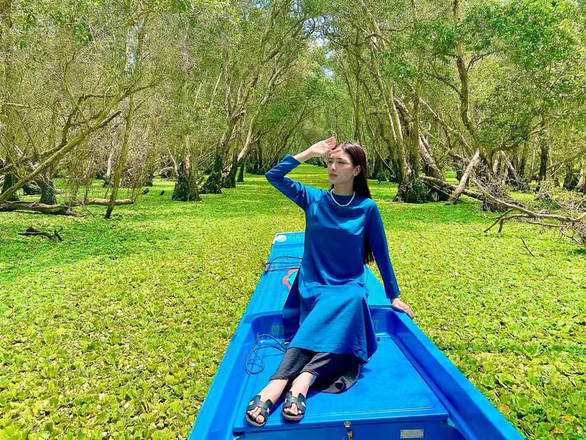
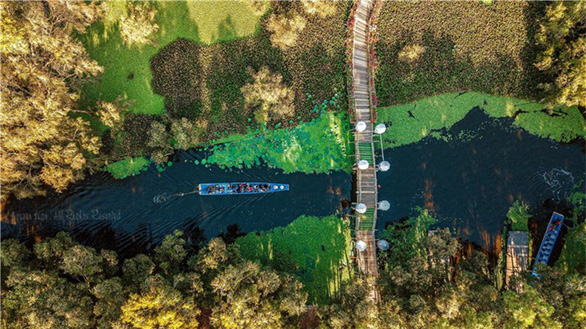
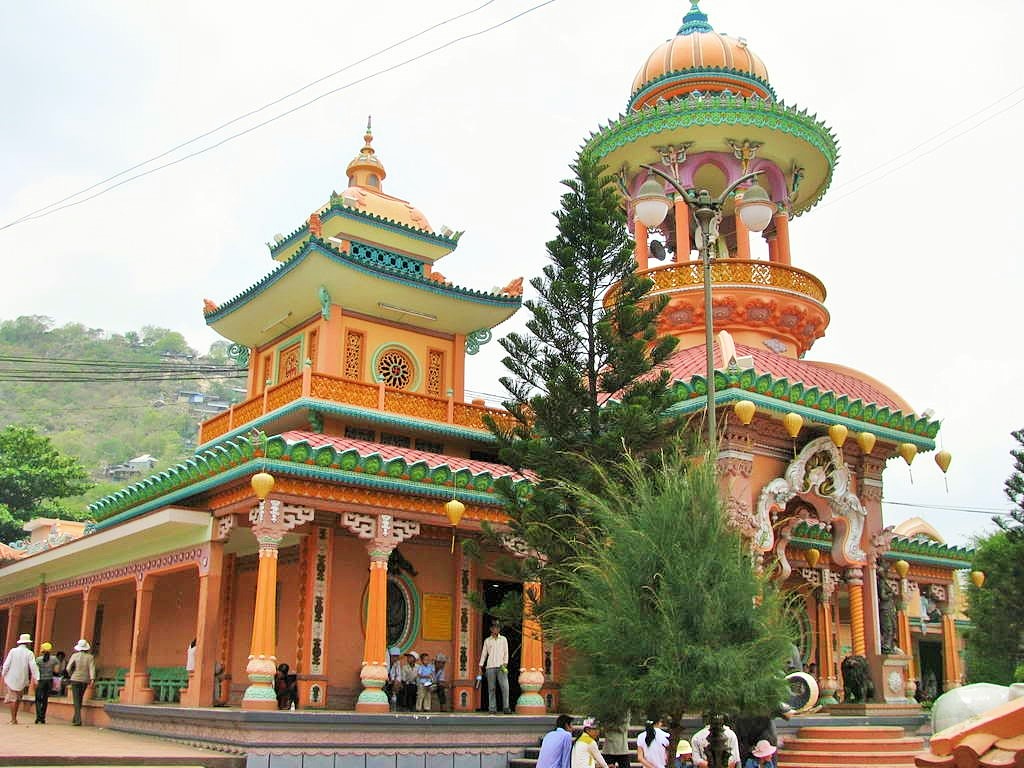
Located in Van Giao Commune of Tinh Bien District in An Giang Province, Tra Su Cajeput Forest covers an area of 845ha, belonging to the national specialized forest system in the western region in Southern Vietnam. It is an ideal place for researchers and those who love wild animals.
Prior to 1975, the local natural forests were destroyed by the enemy’s bombs and became uncultivated areas. After the war, authorities in An Giang Province invested to reforest cajeput and build a 12km long, 4m wide and 4m high dyke system that helps prevent the area from being swamped during flood season.
According to Tran Ngoc Rang, Head of the Tra Su Cajuput Forest Management Board, at present, cajuput from 5 to 25 years old are planted in the 713ha forest. With its ecosystem, the cajuput forest will become a cradle to create the food source for many animals, particularly species of birds.
Here, there are 140 specified floral varieties with 22 varieties of trees, 25 varieties of shrubs, 10 varieties of vines, 70 varieties of grasses, 13 species of aquatic plants, 22 varieties of ornamental plants, 9 varieties of fruit trees and particularly many varieties of medicinal herbs of high value, 11 species of beasts belonging to 6 families and 4 orders, 70 species of birds belonging to 3 families and 13 orders, 2 rare and precious varieties of birds, including Giang sen (Mycteria Leucocephala) and Dieng dieng (Anhiga melanogaster), 20 species of reptiles, 5 species of amphibians and 23 species of fish, including Ca com (Chitala ornata) and Tre trang (Clarias batrachus) having the scientific value and being in danger of extinction.
Tran Ngoc Rang said that in the coming time the management board will build a 10-15ha area to raise wild animals with the aim of developing the area into a garden with animals and plants of the flooded ecosystem in service of education, research and ecotourism.
Since 1999 the forest has attracted tourists. However it wasn't until 2005 tourism activities officially took place. The Province invested 18 billion VND in building infrastructure to serve the management and protection of the forest. Visiting the area, tourists will have a chance to behold the beauty of the forest with the remaining vestiges of rivers, canals, etc., and relax among wild nature for Vietnam travel.
Apart from the significance of preservation and economic value, the area also boasts many unique cultural features as it is the home of the Kh’mer and Kinh people who practice several traditional handicrafts, such as brocade weaving, silk weaving, cooking Thot not (Borassus flabellifer) sugar, distilling cajuput essential oil, raising bees for honey, etc.
With its beautiful scenery and ecological value, the Tra Su cajuput forest annually attracts over 10,000 domestic and foreign tourists and researchers.
Coming to Tra Su cajuput forest, tourists will have a chance to enjoy precious moments living in harmony with nature as well as the wholesome atmosphere.
To get to Tra Su forest, first go to Chau Doc Town in An Giang Province and take a motorbike taxi or grab a taxi and travel 17 kilometers to Tinh Bien District’s Nha Ban Town. It located in an inland area near the Cambodian border.
It includes a 845ha special-purpose forest surrounded by a 645ha buffer zone. The forest has 106 colonies of water birds, bats and various rare and endangered animals and reptiles and a few of them have been listed in the Red Book, and over 140 flora species. Standing on a 10m high watch tower in the midst of the forest, tourists in Vietnam travel can enjoy a panorama of the vast greenery spotted with the white of storks below. Turtles, snakes, as well as other reptiles and freshwater fishes are also abundant in the canals. The colour of the waterways changed from one place to another, sometimes turquoise and at other times silver, purple or amber, due to the numerous species of water creatures.
Rowing along the green mysterious canals is a particularly good ideal. Tourists in Vietnam travel can view the lovely landscape as the scenery drifts along both river banks, enjoy the fresh air as well as listen to the magical music as performed by the birds of the forest and other jungle insects and animals. The tourists will also see the wonderful countryside and farmers busily attending to their paddies, orchards and so on, but still happy to stop for a chat with guests.
During the high water season, the forest's canals and streams are dense with clusters of water ferns, a particularly vivid sight when the setting sun imparts a golden glow on the emerald-green duckweed that blankets the water's surface. Tourists in Vietnam travel can smell the perfume of lotus flowers and water lilies...
Beside the significance of preservation and economic value, Tra Su also boasts many unique cultural features as it is the home of the Kh'mer and Kinh people who practice several traditional handicrafts, such as brocade weaving, silk weaving, cooking Thot not (Borassus flabellifer) sugar, distilling cajuput essential oil, raising bees for honey, etc.
Making tours in Vietnam and witness a serene but lively scene in Tra Su cajuput forest,tourists in Vietnam trave will have an unforgettable trip.
Forbidden Mountain is the most beautiful mountain in seven ones of That Son Mountain range, belongs to An Hao commune, Tinh Bien distric, An Giang province, about 90km far from the centre of Long Xuyen city.
Forbidden Mountain is the most beautiful mountain in seven ones of That Son Mountain range, belongs to An Hao commune, Tinh Bien distric, An Giang province, about 90km far from the centre of Long Xuyen city. In the forth lunar month every year, Via Ba Chua Xu festival is held in Chau Doc, attracting thousands of guests from everywhere. Especially, the national biggest statue of Di Lac Buddha is located in the top of Forbidden Mountain contributes to attract more travelers.
The biggest statue of Di Lac Buddha in Vietnam
Forbidden Mountain is 705m high, there are many bends on the road to the mountain top. Before reaching the mountain top, visitors is recommended to come to Van Linh pagoda to visit Buddha and to contemplate the architecture in the pagoda area.
Van Linh ancient pagoda formerly was a small pond covering a 1ha area. The pagoda compound includes a main hall worshipping Thich Ca Buddha, a hexagonal tower which has 7 floors and 30m height worshipping many Buddha, a tower having a big bell and another worshipping Xa loi Buddha. The pagoda was rebuilt in 1995.
Van Linh pagoda
Visit the pagoda, tourists can enjoy not only special architectural constructions but also pots of ornamental plants which are cared elaborately having spectacular shapes, specious baskets of orchid, high pine trees, cypress …
The statue of Di Lac Buddha in the top of Forbidden Mountain is 36m high, 600 tons of weight; its construction cost is 3.5 billion VND. This statue is recognized as the biggest statue in Vietnam by Vietnamese Record Book Centre (Vietbooks).
From the far, visitors can see the statue of Di Lac Buddha being imposing, grave in the 716m-high mountain top. Closely reaching the statue, they will feel the warmness, peace when contemplating the Buddha who has a joyful, gentle, ethical face.
An overview of Forbidden Mountain seen from the tower of Van Linh pagoda
Furthermore, tourists can also visit other attractions such as Phat Lon pagoda, Bach Tuong Stone, Thuy Liem cave.
After finishing visiting the mountain, people stop at Lam Vien resort which covers 100ha and situates in the east of the mountain bottom. There are various entertainment services with don ca tai tu (đờn ca tài tử) area, playing field for kids, Kaolin hotel and restaurant serving specialties of the mountainous region.
A travel tour to Forbidden Mountain can last two days and a night in which people can rest at Forbidden Mountain or come back to Chau Doc after visiting the commune market. It can be sure that the tour will leave the unforgettable impressions in the visitors’ hearts.
Tan Chau silk has its fame because of the softness, toughness, long-wearing and high absorbability of natural silk material. All clothes made from Tan Chau silk bring to people comfort, coolness in summer, warmness in winter. Tan Chau silk is deserved to be called “Queen” of silk.
Not only for legends and remains, Tan Chau silk village in An Giang is also famous for the brilliant past of a special craft village.
Tan Chau silk has its fame because of the softness, toughness, long-wearing and high absorbability of natural silk material. All clothes made from Tan Chau silk bring to people comfort, coolness in summer, warmness in winter. Tan Chau silk is deserved to be called “Queen” of silk.
Tan Chau silk is deserved to be called “Queen” of silk.
Actually, materials for making Tan Chau silk are all produced by local people themselves. They grow shrubbery feeding silkworm to generate silk, plant mac nua (D. mollis) tree to take its fruit making dye. To make a unit of Tan Chau silk, the makers must spend many time and labor in many different parts of process. Firstly in silk choosing part, the maker must select the good type of silk to squeeze, seize on the loom then put on the weaving pattern. After finishing weaving, weaver starts the part of making dye. The big and young mac nua fruits are selected (the ripe ones are not suitable because of not having resin), kneaded well in mortar or in crushing machine and then dissolved in water, creating a nice yellow liquid which will turn into black when meeting the air and temperature. This liquid is filtered to leave the residue and used for dying.
Mac nua (D. mollis) fruit to make the dye
The part of dying silk is considered the most important and most elaborate one in the whole process which includes a hundred times of soaking silk in dye to ensure that each silk thread absorbs equally After each soaking time, people have to use their hands carefully squeezing silk then hang it out. When drying, they must choose the suitable sunny days in order to dry silk 4 units of sunlight per day. If being hang out in rain or light sunshine, the quality of silk will decrease. After about 40-45 days of dying and drying, the product is taken in new process becoming beautiful clothes which make people to contemplate and to praise because of their brilliant beauty.
Because of the long time and much labor for making Tan Chau silk, its price is very high. In about 60s -70s of 20th century, this kind of product was not suitable for daily needs of people then slowly came to disappearance. The internal market refused it due to its expensiveness while color was the reason for the refusal of external market.
Makers have found other dying technique to generate different colors
However, for recent years, due to the common direction of development and fashion trend leading to high quality products which express cultural features, the brand of Tan Chau silk begins to be restored and returned into deserved position. Besides the traditional black color of natural dye from mac nua fruit, Tan Chau silk makers have found other dying technique to generate different colors, meeting the customer’s requirements which are more various day by day. This is a valuable chance for a famous craft village, which has been down for a long time, to restore its thriving past.
Tay An is an ancient pagoda with a mixture of Vietnamese and Asian architectural styles. Lying on one side of the Sam Mountain, under the lights, the pagoda itself looks like a monk dressed in yellow, heading to Chau Doc Town, An Giang Province.
If tourists in Vietnam travel want to explore and find about ancient pagoda culture of Vietnam, you could visit Tay An pagoda, which was designed in a similar style to Indian ones, the front of the pagoda has an oval dome and its roof is in the shape of a sailboat. Nevertheless, designs inside the pagoda basically follow the style of traditional Vietnamese Buddhist pagodas. The Dai Hong Bell is of particular interest as it was made of gold and copper under the Tu Duc’s Reign and is now over 111 years old. Somehow it has even managed to keep the sound of its voice ringing clear after all these years.
Passing the nine-step stairs, visitors will enter the gate of the pagoda and standing at the temple gate, they will see the Mother Holding Child Statue. There are two large statues of elephants in the ground of the pagoda. One is a black elephant with two ivories, representing power over malice and another is a white one with six ivories, representing restful mind.
The Western Corridor of the pagoda is very large and able to provide space for over 100 pilgrims at the same time. In front of its corridor, there are two statues of the Goddess of Mercy in white and inside the corridor are two large statues of A Di Da God. Rooms for monks are located at the back of Tay An pagoda. Pilgrims visiting the Pagoda to pray and smoke from their incense creates a solemn atmosphere. The main temple has more than 100 statues each representing the power of Buddhism; the most prominent statue is a Buddha sitting on the Lotus Tower.
Chau Giang Brocade is a perfect combination between traditional and modern specialties that today has found its' own name in the domestic market, and many customers abroad.
Located in Tan Chau District, An Giang Province, Chau Giang Village has been well-known with brocade weaving in recent years. Chau Giang Brocade has not only traditional beauty of brocade but also unique in producing Cham ethnic minority specialty varies with a number of patterns, mostly known are: xarong.
Chau Giang Brocade is a perfect combination between traditional and modern specialties that today has found its' own name in the domestic market, and many customers abroad.
Traditionally, the local girls from age 12 will be taught to weave brocade. And from that women will be responsible for weaving, sewing clothes, scarves, hats ... for their whole families.
Visit Chau Giang weaving village, beside the sound of weaving loom, your eyes will be attracted to the peaceful picture of women hiddened after weaving looms.
Moreover, especially tourists in Vietnam travel could explore the charm of this village, you also have the opportunity to admire majestic mosques, with decoration characteristic of the Cham people.
Cam Mountain, or Thien Cam Son (heaven’s forbidden mountain) is the highest and largest one belonging to the superb Mountains (That Son) in An Giang.
The majestic mountain places itself imposingly in the Cuu Long (Mekong) Delta on the altitude of 710m. The panoramic view of Great Buddha Pagoda (in An Binh, An Hao Commune) from Vo Bo Hong Peak presents a great valley surrounded by rolling mountains in the Thien Cam Son chain such as Vo Dau, Vo Bo Hong, Vo Thien Tue, etc.
Endowed with such spectacular mountainous terrain, the Mountain is considered as a Dalat (a famous highland resort) in the Mekong Delta. it has a cool climate year-round, original natural spots associated with interesting, heart-warming legends and myths that lure increasing numbers of tourists in Vietnam tours and vacationers.
Why is it called Forbidden Mountain? According to a folk tale,Cam Mountain was once very rugged with many frightening beasts and invisible figures living there. As a result, the inhabitants in the area forbade themselves from coming there. However, another legend goes that Nguyen Anh sought refuge in the mountain from the chase of Tay Son insurgents and forbade anyone’s access to the mountain, hence its name “Forbidden Mountain”.
Downhill in the east is 100-ha Lam Vien Tourist Park on Cam Mountain which offers a wide range of recreational services including Kaolin Restaurant featuring specialties of the Seven Mountains Region.
Don’t miss the poetic Thanh Long (blue dragon) stream while following the trail from the park up the mountain. Resume your trip until you reach a fork, there you are in “Cam Mountain Highland”. Take the right-hand track for about 1km, you will see Vo Thien Tue peak. Then go back to your left hand up the sloping path to the Great Buddha Pagoda. On the way there, visitors in Vietnam tours can stop by Thuy Liem cavern, or admire Vo Bach Tuong (a grand white elephant-shaped rock on the side of the mountain) in O Cat. Then you can make a sightseeing tour of the Great Buddha Pagoda, Van Linh (holy) Pagoda, Vo Bo Lon (a grand bull-shaped rock), and finally Vo Bo Hong, the highest peak of Cam Mountain (and also of the Mekong Delta) from which you can see as far as Ha Tien sea waters if the weather is fine
As usual in April of the lunar calendar, locals in Chau Doc District, An Giang Province in southern Vietnam and others in provinces nationwide go on a pilgrimage to Sam Mountain to worship Ba Chua Xu (Lady of the Region).
According to legend, nearly 200 years ago Sam Mountain was desolate, bushy and thinly populated. It was the home of many wild beasts. At that time, the invaders often pestered the life of locals here. One day, a squad of invaders climbed up Sam Mountain and found a beautiful stone lady statue. They wanted to take the statue but could not move it. In anger, they disfigured the statue, breaking off the left hand.
Shortly after, a little girl who had been playing joyfully in the village started shaking uncontrollably and began very flush. She called herself as Chua Xu Thanh Mau (Lady of the Region) and said that the statue of the Lady on Sam Mountain was destroyed by the invaders so the villagers should take the sculpture down from the mountain. When the villagers climbed up the mountain they were very surprised when seeing the statue.
They selected nine girls to carry the statue. When arriving at the foot of Sam Mountain, the statue became so heavy that the girls were forced to place it on the ground. The village elders understood this as a signal from the statue that this was the place that it wanted to remain so a ceremony was held and a shrine was built on the spot to dedicate to her. That day was the 25th day of lunar April. Since then, the locals usually hold the Lady worshipping ceremony. At present, on Sam Mountain still remains a vestige of a stone platform where the statue was located.
The Lady Shrine was initially built from bamboo and it was rebuilt in 1870. In 1972, the Shrine was again rebuilt but much larger than before. The architecture of the Shrine has the shape of Chinese script “nation” with a lotus-shaped tower and three-layer roof that is curved like the bow of the boat. The Shrine is roofed with blue tiles. The patterns and designs on the sanctum feature Indian art. Above are strong and beautiful genie statues using their hands to prop up the beams that were carved and engraved finely and sophisticatedly. The Shrine also boasts many red-lacquered panels and couplets. Particularly, the wall behind the statue and four ancient columns have been kept intact.
The statue bears the Oc Eo Culture with the fine arts motifs of the Ba La Mon (Brhmanes) religion originating from India, similar to the four-hand statue in Linh Son Pagoda in Oc Eo Township , Thoai Son District, An Giang Province.
At present, all rites of the festival are held solemnly. At midnight on the 23rd day and in the early morning of the 24th day of lunar April, the statue-bathing rite is carried out for nearly one hour by four or five prestigious middle-aged women in the village. They bathe the statue in water fragranced with jasmine, spray it with perfume and then adorn the statue with a new bonnet and gown. Although the ceremony is held behind a silk curtain, it attracts the participation of thousands people who stand outside the sanctum.
On the night of the 25th day of lunar April and in the early morning of the 26th day, Tuc Yet and Xay Chau, the major rites of the festival, are carried out. At midnight, the Tuc Yet rite is performed by the main priest and four nobles. The offerings include a white pig, a plate of pig’s blood, a tray of steamed sticky rice, a tray of five-fruits, etc. To the ceremonial music and drum and gong beats, the main priest and four nobles offer the Lady incense, wine and tea and read sermons.
After the Tuc Yen rite is the Xay Chau rite. The main priest drips a branch of poplar in a water bowl and splashes the water while reading “first, praying to heaven for good things; second, praying to the land for a bumper crop; third, praying for mankind's longevity; fourth, praying for annihilating demons”. When he finishes the rite, he beats three salvos of drumbeats to begin the Hat boi (classical opera) performance on the stage before the central sanctum. At 4am on the 27th day of lunar April, the Chanh Te rite is held, but is less spectacular.
Ba Chua Xu Worshipping Festival has become a great cultural event in Southern Vietnam that annually attracts about 2 million tourists nationwide who hope to ask for blessings and witness a typical cultural feature in An Giang Province.
Cow racing is one of the most interesting festival in An Giang. This festival is held annual year from the 9th to the 10th day in Lunar Calender and it is a traditional festival of Khmer people.
Cow Racing Festival has existed for a long time in the Seven Mountains Region of An Giang Province. Taking place on Sene Dolta day of Khmer people in Mekong Delta (from the 9th to the 10th day in Lunar Calendar), Cow Racing Festival is for expressing gratitude toward ancestors.
To prepare for Cow Racing Festival, Khmer people choose a flat and wet rice-field with 200 meter long and 100 meter wide. To become a perfect area for cow racing, his rice-field must be muddy, surrounded by fence and safe stop. Racing course is about 120 meters long along the fence with the starting point also the ending point marked by a blue flag and a red flag.
Before the race, people choose pairs of cows to compete with each other by drawing. According to the rule, pair of cows running out of the racing course must get out of the competition. During the race, pair of cows trampling on the rake of the front pair will be the winner. Interestingly, the driver must stand steadily on the rake because falling out of the rake will be considered loser.
The unique and interesting point of cow racing is two cows are tied by a special rake. After the signal whistle of referee, the driver will hit into the cows’ asses with a tow. However, this driver must be very skillful in hitting two cows with the same energy to make them run with the same speed.
On the festive day, locals gather around the arena since the early. From the start to the end of the race, pairs of cows are always encouraged and urged by the inspiring and exciting atmosphere of simmering cheers and applause.
Coming to Cow Racing Festival, tourists will experience unique cultural festival of a characterized village in Mekong Delta. You will live in frenetic atmosphere, witness a oner race that you have never known before and get unforgettable memories about a new culture.
The gorgeous mountain ranges and lush green fields of the region touch the skyline of Tri Ton, An Giang Province district. Ta Pa mountain is one of seven peaks named That Son, which means "seven famous mountains".
The gorgeous mountain ranges and lush green fields of the region touch the skyline of Tri Ton, An Giang Province district. The area is also one of the most scenic driving routes in the Mekong Delta for adventurous travellers. When we learned of the beautiful mountain landscape of Ta Pa, we drove straight from the Can Tho City centre to Tri Ton without hesitation to explore the natural beauty of the western side of the Delta.
Leaving the urban centre and Ninh Kieu District, we drove slower than usual due to roadwork: bumpy roads and dispersed gravel greeted us; in some spots most of the road was fenced off for asphalt operations; the road dust was stirred up by running vehicles so often that it was almost impossible to see the road ahead of us. The route featured very heavy traffic, so we faced a crazy traffic jam and road chaos all the way from Thot Not, O Mon to Long Xuyen.
“This is a challenging road trip for us, isn’t it?” my friend said.
When Long Xuyen City appeared our tiredness disappeared: we were halfway to Tri Ton! We stopped to rest and grab a quick bite to eat. Being adventurous travellers, we prefer eating at casual roadside rest stops rather than at high-end restaurants. The food we discovered was delicious and affordable.
When we left Long Xuyen and resumed our trip to Tri Ton, clouds began to gather and it started raining heavily. Soon we were wet and cold. The downpour brought strong winds which whipped against us and we could hardly see the road.
The rain slowed us down. But after 2 hours of driving in the rain we neared our destination. By that time, the rain had almost stopped. Only a few droplets continued to fall. A wondrous landscape emerged before us, brightening our mood which had been dampened by the heavy rain.
Magnificent mountain ranges emerged. Ta Pa’s towering mountain cliffs loom like castle walls featuring rough rock pillars. The rock walls vary in shape and size and seem quite peculiar.
Atop the mountain is a deep, clear emerald lake named Ta Pa. Seventeen metres deep, the lake is the by-product of a former mining operation. The surrounding mountain cliffs provide clear vistas of the lake’s blue depths.
Lake-bottom rocks add many colours to the scene: light blue, black, dark orange and light yellow. When the sky is clear, the lake surface reflects the pastoral setting like a giant emerald-coloured mirror.
"Ta Pa Lake is as beautiful as a young girl aglow in nature," said my friend, enchanted by the scenery.
From the mountaintop, visitors can feast their eyes on the town of Tri Ton and relish the beauty of paddy fields in the foothills of the To mountain. The bright green paddies are typical of scenery in the southern countryside. During harvest season, the golden rice fields are highlighted by rows of vibrant green palm trees.
Charming trails meander through the colourful fields. Rice plants in each patch ripen at different times due to microclimate variations, creating multiple shades of greens and yellows.
The fresh air and beautiful Ta Pa mountain scenery made our challenging road trip worthwhile. Our getaway trip to Tri Ton was very pleasant. It helped us release all our stress. And it heightened our interest in Viet Nam’s truly stunning landscape.
Districts: An Phu, Tan Chau, Phu Tan, Chau Phu, Tinh Bien, Tri Ton, Cho Moi, Chau Thanh, Thoai Son.
A floating market in Long Xuyen City, An Giang Province, Vietnam.
OVERVIEW:
An Giang is located west of the Mekong Delta between the Tien Giang and Hau Giang Rivers and shares a 95-km border with Cambodia. It is next to the Cuu Long River and consists of a few midland areas and low mountains.
The main ethnic groups found in the province are the Kinh, Khmer, Cham, and Hoa. The region is located in a monsoon tropical climate where the annual average temperature varies between 26 and 28°C. The two distinct seasons are the dry season, from December to April, and the rainy season, from May to November. Floods often occur from the middle of August to the middle of November.
An Giang is criss-crossed by many rivers and canals which make a convenient water transport system. The two tributaries of the Mekong river, the Tien and the Hau, run across the province. They deliver millions of cubic meters of alluvium annually to the region. As a result, the deposits have formed several islets which are extremely fertile and covered with lush green vegetation.
An Giang is the location where many relics belonging to the Oc Eo Civilization have been excavated. Many archaeologists have concluded that An Giang was the location of a bustling commercial sea port built with many major architectural projects which can be traced back to the first century. This conclusion has glorified the province as a one time economically and culturally prosperous locality.
An Giang has long been famous for its traditional occupation of mulberry growing, silkworm raising and silk weaving. Famous sites and attractions include An Giang Museum in Long Xuyen, Ba Sam Temple Festival at Sam Mountain in Chau Doc, and Cam Mountain in Binh Tien.
GEOGRAPHY:
An Giang Province is located to the west of the Mekong Delta between the Tien and Hau rivers and shares a 100km border with Cambodia in the north - west. It also shares border with Dong Thap Province in the east, Cantho City in the south - east, and Kien Giang Province in the south - west.
An Giang has two main types of topography: midland areas and low mountains. The low mountains is Bay Nui (Seven Mountains) in Tinh Bien and Tri Ton districts. Vinh Te Tunnel runs along with the province's border in the west, which connects from Chau Doc to Ha Tien.
CLIMATE:
An Giang is divided into two seasons: the rain (from May to November), and the dry (from December to April next year). The annual average temperature varies 27ºC. The highest temperature is 35ºC - 37ºC from April to May and the lowest ones is 20ºC - 21ºC from December to January next year. The annual rainfall is 1,400 - 1,500mm.
TOURISM:
An Giang is main province in rice output. The province also has corn and aquatic products as basa fish, shrimp, cuttle... An Giang is also renowned as traditional handicraft such as Tan Chau silk, Chau Doc fish sauce and other consume products. Especially, long-standing handicraft weaves fabric industry of Cham ethnic group.
An Giang is famous for particular festivals as Ba Chua Xu, Chol Chnam Thomay, Dolta festival and ox racing. Other famous sites and attractions include Sam Mountain in Chau Doc, Cam Mountain in Tien Binh, Tuc Dup Hill, grottoes network of Thuy Dai Son, Anh Vu Son, Co To, and many historical vestiges.
TRANSPORTATION:
An Giang has a relatively convenient land and water transport system. National Road 91 connects to Cam-pu-chia. Buses run from Chau Doc to Long Xuyen, Cantho, and other destinations in the Mekong Delta.
Long Xuyen City is 62km from Cantho, 125km from My Tho, and 190km from Ho Chi Minh City. Chau Doc Town is 96km from Ha Tien, 117km from Cantho, 179km from My Tho, and 245km from Ho Chi Minh City.
An Giang is the land of beautiful places and breathtaking view of paddy rice fields in the Mekong Delta area. This is one of the most mysterious landscapes in Vietnam. An Giang travel guide from A to Z will introduce useful information for visitors to plan exploring An Giang land!
An Giang Overview
An Giang is a province in southern Viet Nam and is a part of Long Xuyen ( Long Xuyên) Quadrangle which suffers a lots of natural disaster. However, this is also advantageous to make fertile soil for this land. An Giang possesses many places that attract travelers to its beauty. This province is also the land of the Cham ( Chăm) people, an ethnic minority of Vietnam, so the culture is varied and makes for an interesting experience.
Visit to An Giang province , the first feeling of here is peaceful and comfortable . The paddy rice fields is green and luxuriant. The sky is blue and fresh. The beautiful voice of birds mix the voice of children on paddy fields. All of things create the wonderful picture which anyone cannot forget when coming here.
The stunning view of Ta Pa ( Tà Pạ) pagoda, An Giang. Photo: Anh Tuan
Weather in An Giang? When is the best time to travel to An Giang?
Like other places in Mekong Delta, Chau Doc has a climate of tropical monsoon with two separated season, rainy season (from May to November) and dry season (from December to April the following year). The average temperature is 27 degree. The weather in Chau Doc ( Châu Đốc) in general is quite suitable for travel all year round.
When is the best time to travel to An Giang?
– From March to April: The weather in An Giang is cool. This time is suitable for visiting landscape.
– April ( Lunar month): Ba Chua Xu ( Bà Chúa Xứ) Temple Festival is annually held from the 23rd to 27th of the April lunar month.
– Late August- Early September ( Lunar month): Seven-Mount’s Ox racing festival. This is a unique and traditional festival of Kmer people in An Giang.
Ba Chua Xu ( Bà Chúa Xứ) Temple Festival attracts visitors from everywhere. Photo: @hongngocthanh5390
– From September to the end of October: An Giang is in the floating water season. This is the best time to check in Tra Su ( Trà Sư) melaleuca forest, when water is likely to flood the whole area of the forest, creating unforgettable scenes.
– From September to November: This is the best time to admire the paddy rice fields in Ta Pa ( Tà Pạ), An Giang
The picture of people coming to the field to cultivate rice in the early morning in An Giang. Photo: Nguyễn Hoàng Nam
How to get to An Giang?
Because the Mekong is a delta, the roads are very flat and it’s easy to reach An Giang. Almost every tourist company has at least one tour to visit An Giang Province. Visitors in Northern and Central of Vietnam can take plane to HCM city, then visiting to An Giang by coach or motorbike.
By Coach
+ From HCM city : visitors buy tickets at Mien Tay ( Miền Tây) bus station to Long Xuyen ( Long Xuyên) city or Chau Doc ( Châu Đốc) city with ticket price about from VND 140,000 to VND 200,000.
Ho Chi Minh City to Long Xuyen City
Phuong Trang Bus Line
+ Address at HCM city: Mien Tay ( Miền Tây) Bus Station, 395 Kinh Duong Vuong ( Kinh Dương Vương) Street, An Lac ( An Lạc) Ward, Binh Tan ( Bình Tân) District, Ho Chi Minh City.
+ Address at Long Xuyen ( Long Xuyên) city: 99 Ham Nghi ( Hàm Nghi) street, Binh Khanh ( Bình Khánh) Ward, Long Xuyen ( Long Xuyên) City, An Giang Province.
+Tel: (+84) 2839 208 559
Hung Cuong ( Hùng Cường)
+ Address at HCM city: Mien Dong ( Miền Đông) Bus Station, 292 Dinh Bo Linh ( Đinh Bộ Lĩnh) street, Ward 26, Binh Thanh ( Bình Thạnh ) district, Ho Chi Minh City.
+ Address at Long Xuyen city: 392 Pham Cu Luong ( Phạm Cư Lượng) street, My Quy (Mỹ Qúy) ward, Long Xuyen ( Long Xuyên) City, An Giang Province.
+Tel: (+84) 2838 572 624
Ho Chi Minh City to Chau Doc City:
Phuong Trang Bus Line
+ Address at HCM city: Mien Tay ( Miền Tây) Bus Station, 395 Kinh Duong Vuong ( Kinh Dương Vương) Street, An Lac ( An Lạc) Ward, Binh Tan ( Bình Tân) District, Ho Chi Minh City.
+ Address at Chau Doc ( Châu Đốc) city: Chau Doc ( Châu Đốc) Bus Station, National Highway 91, Vinh My ( Vĩnh Mỹ) ward, Chau Doc ( Châu Đốc) city, An Giang Province
+Tel: (+84) 2839 208 559
Hung Cuong ( Hùng Cường)
+ Address at HCM city: Mien Dong ( Miền Đông) Bus Station, 292 Dinh Bo Linh ( Đinh Bộ Lĩnh) street, Ward 26, Binh Thanh ( Bình Thạnh ) district, Ho Chi Minh City.
+ Address at Chau Doc ( Châu Đốc) city: Chau Doc ( Châu Đốc) Bus Station, National Highway 91, Vinh My ( Vĩnh Mỹ) ward, Chau Doc ( Châu Đốc) city, An Gian Province
+Tel: (+84) 2838 572 624
By Motorbike
If you want to have an adventure and interesting trip, you can go to An Giang by a motorbike but you have to ensure the safety before driving on your own.
Visitors can travel along national highway 1A to Tien Giang ( Tiền Giang) province through My Thuan ( Mỹ Thuận) bridge, then continue on the national road 80 going past Sa Dec ( Sa Đéc) and Vam Cong ( Vàm Công) ferry, visitors will reach Long Xuyen ( Long Xuyên) city.
There is another way for those who want to see the bordering areas. Visitors will head out to national road 62 toward to Binh Hiep ( Bình Hiệp) bordering gate, then go past Hong Ngu – Tan Chau ( Hồng Ngự- Tân Châu) bordering towns, you will arrive Chau Doc ( Châu Đốc).
Exploring An Giang by motorbike is an interesting experiences. Photo: @langthang.angiang
Vehicle/ Moving in An Giang
+ Bike/ Motorbike: Visitors can rent a bike from a Vietnam travel agency in the center of Chau Doc ( Châu Đốc) city or even at your hotel. Traveling around An Giang by a bike is also a wonderful experience which should be tried once.
+ Bus: Most famous sites in An Giang are quite close so you can use a bike or motorbike, but for a trip to Sam mountain, Tinh Bien ( Tịnh Biên), taking a bus from center is a good option. It is easy to find a station in the central city.
+ Ferry: To visit some area such as Bung Binh Thien ( Búng Bình Thiên), fishing villages, Cham ( Chăm) villages in Chau Giang ( Châu Giang)…you will need to travel on the river. You can rent a boat or take ferry at Chau Doc ( Châu Đốc) port.
Beautiful places in An Giang
Cam (Cấm) Mountain
With the height of 716 meters and the length of 7,500 meters, this is the highest mountain of the Seven Mountains, as well as the most sacred one. Its name also speaks of a legend. In the late 18th century, King Gia Long before becoming the first king of the Nguyen Dynasty was defeated by the Tay Son ( Tây Sơn) Dynasty and fled to this mountain for refuge. His subordinates forbade the locals from entering the mountain. Because of this, the mountain was called Nui Cam ( Núi Cấm), meaning the forbidden mountain.
The largest Maitreya Buddha statue in Asia is located on Cam mountain. Photo: Collection
Tuc Dup (Tức Dụp) Hill
Located in Tri Ton ( Tri Tôn) commune, Tri Ton ( Tri Tôn) district, An Giang, Tuc Dup ( Tức Dụp) hill is not only famous for its historical relics associated with the heroic years of the nation but also attracted by peaceful scenery. The mountains here are covered with a layer of mist as if the fairy scene. In the middle is the rocky field that creates the scene attractive of thousands of people. Besides beautiful natural scenery, thanks to the promotion of tourism, this place has been built more interesting entertainment points but does not lose the natural inherent beauty.
++ Location: Tri Ton ( Tri Tôn) Town, Tri Ton ( Tri Tôn) District, An Giang Province.
Coming to there, visitors will be surprised at amazing landscape of a 300-meter hill with beautiful falls and lots of high and dangerous. Photo: @vic_tor_ten
Sap ( Sập) Mountain
At an altitude of 85m, Mount Sap is known as one of the most charming, poetic mountains in An Giang. It is home to vast, green rice fields surrounded by majestic mountains and clear blue water at the foot of the mountain. Although this is an artificial lake created by the process of human stone mining, today it was built into Mr. Thoai Lake Resort.
++ Location: Nui Sap ( Núi Sập) Town, Thoai Son ( Thoại Sơn) District, An Giang Province.
For visitors looking for peace, quiet and relaxation, Sap Mountain offers a tranquil sanctuary in the heart of nature. Photo: @anlu2605
Ba Chua Xu Temple in Sam Mount
Located at the foot of Mount Sam, Ba Chua Xu Temple was built with the architecture of a blooming lotus-shaped tower, three-tiered roofs, green tiles and bold artistic patterns. Sam Mountain is a famous tourist destination in An Giang, famous for sacredness. So tourists throughout the country often come here for pilgrimage and worship. Every year, from 23rd to 27th of the lunar calendar, the people here hold the festival of Via Ba ( Vía Bà) in order to pray and commemorate the merits of the helpers of the people, bringing the rain and wind.
During the festival days, many traditional cultural activities and dances are organized. Photo: @lucynguyen2403
Ta Pa ( Tà Pạ) Paddy Field
There are no tourist services in Ta Pa ( Tà Pạ) paddy field, but this is a really beautiful attraction! Once you visit An Giang Province, do not miss this beauty! You will never regret spending your time visiting Ta Pa ( Tà Pạ) paddy field, since the perfectly beautiful scenery here will win your heart forever. This is just an area dedicated to growing rice, but the wonderful combination of the field, the mountains, and the trees will deliver an unforgettable experience.
During floating seasons, borderless rice fields in Ta Pa, Tri Ton district appears as a giant carpet decorated with green paddy fields. Photo: Nguyễn Hoàng Nam
Tra Su (Trà Sư) Melaleuca Forest
This place is considered as the most beautiful site in Chau Doc ( Châu Đốc) which makes it a must-visit place once visitors set foot in the city. All of the trees are sunk deep in the water, creating a unique environment in which to discover this “sunken” forest. Visitors can also witness the biodiversity of the plants: it possesses hundreds of fauna and flora which are on the edge of extinction. It doesn’t stop there. The most interesting thing is that visitors can explore every corner of this forest by boat and immerse yourself in the splendor of the forest.
Endless green carpets of water hyacinth and enjoyable singing of birds are expected to be lasting experiences in the heart of the visitors. Photo: Collection
Ta Pa (Tà Pạ) Pagoda
Traveling from Tri Ton Town along Nguyen Trai Street for about two kilometers, visitors will reach the 300-year-old Ta Pa Pagoda welcoming you with its two giant statues of the Keynor bird deity. The pagoda is built in Khmer architecture and décor with the main colors of yellow, orange and red. From the pagoda’s tower, visitors are treated to a stunning panoramic view of the busy Tri Ton town below interlacing with the greenness of rice fields and rivers. Moreover, visitors have a chance to admire the talents of artisans via the statue garden with a number of Buddhist characters and genies.
The pagoda is built in Khmer architecture and decor with the main colors of yellow, orange and red. Photo: Nelly Nguyễn
Bung Binh Thien (Búng Bình Thiên)
This is a lake located in An Phu District. According to the local dialect, Bung ( Búng) means lake or pond; Binh ( Bình) means flat and peaceful, referring to the tranquil water of this lake. Thien ( Thiên) mean heaven and god. Therefore, the name Bung Binh Thien ( Búng Bình Thiên) tells us that this is a peaceful lake gifted by the god from heaven! You can hire a boat to float on the lake, enjoying the fresh and tranquil atmosphere and the beautiful sights.
This is a peaceful lake gifted by the god from heaven: @seanla999
Chau Doc (Châu Đốc) Floating Village
The floating village of Chau Doc ( Châu Đốc) city is also a village of the Cham ( Chăm) people. It consists of houses floating on Hau ( Hậu) River, with the roof and walls made of aluminum tole. Because many locals must raise fish for a living, floating houses are made to take care of the fish flocks. Visit this floating village, and you will have the chance to feed the fish yourself, buy fish, and cook them on site.
When traveling to An Giang, visitors will enjoy the extraordinary feeling on these floating houses. Photo: Nguyễn Phố
Ta Pa (Tà Pạ) Lake
The people that love traveling cannot ignore Ta Pa ( Tà Pạ) – an attractive tourist destination can make anyone passionate by fresh beauty. Especially, on the top of Ta Pa ( Tà Pạ) Mountain, there is a very beautiful sapphire-blue fresh lake, which promises to be a very unique place to check in. Standing on Ta Pa ( Tà Pạ) Mountain, you can look down to see the beauty of the fields with many green levels.
Tà Pạ Lake is as beautiful as a young girl aglow in nature. Photo: @dichoivoithao
Mubarak Mosque
Mubarak is one of the oldest mosques of the Muslim community of Cham people in the Mekong Delta province of An Giang, and it lures many tourists to explore the culture and religion as well as architecture. The pretty, pastel Mubarak Mosque, where local Cham Muslim children study the Qur’an in Arabic script, is on the river bank opposite Chau Doc. To get there, visitors can take a ferry from Chau Giang ferry landing across the Hau Giang River. From the ferry landing, walk inland from the river for 30m, turn left and walk 50m..
Mubarak mosque is the spiritual symbol of the community. Photo: @langthang.angiang
What to eat in An Giang? Restaurants in An Giang?
Rice Noodle Soup with Fish
++ Address:
Long Xuyen (Long Xuyên) city: 22 – 24 Nguyen Thai Hoc (Nguyễn Thái Học) street, My Binh (Mỹ Bình) ward, Long Xuyen (Long Xuyên) city.
Chau Doc (Châu Đốc) city : Rice Noodle Soup with Fish at Le Cong Thanh (Lê Công Thành) street, and Be Hai (Bé Hai) restaurant at Chi Lang (Chi Lăng) street, Chau Phu A (Châu Phú A) ward, Chau Doc (Châu Đốc) city, An Giang province.
Tan Chau (Tân Châu) town: Tan Chau (Tân Châu) market, restaurant at Chau Phong (Châu Phong), Chau Giang (Châu Giang) ferry.
This rice noodle soup is served with broth covering noodle and topped with stir-fried fish meat with turmeric, shredded morning glory and water mimosa. Photo: Collection
Dong Que (Đồng Quê) restaurant, 108 Trung Nu Vuong (Trưng Nữ Vương) street, ward 8, Chau Doc ( Châu Đốc) city, An Giang province.
Bya Bong 2 (Bảy Bồng 2) restaurant, 46 Trung Nu Vuong (Trưng Nữ Vương) street, Chau Phu B (Châu Phú B) ward, Chau Doc ( Châu Đốc) city, An Giang province.
It is great to enjoy it with local fresh vegetables and noodles. Photo: Collection
Vietnamese Pancake ( Bánh Xèo)
++ Address:
Along the road leading to Chau Doc ( Chau Doc) pagoda, An Giang province.
The unique process to make delicious Vietnamese pancakes. Photo: Nguyễn Bình
Chau Doc Cow Cake with Palm Sugar
++ Address:
Chau Doc (Châu Đốc) market and Tourist areas.
Ut Dut (Út Dứt) restaurant, 13 Nguyen Thi Minh Khai (Nguyễn Thị Minh Khai) street, Long Thanh ward, Tan Chau (Tân Châu) town, An Giang province.
Chau Doc Cow Cake made from rice powder, palm sugar and yeast. Photo: Collection
Seven dishes of beef in Sam Mountain
++ Address:
Tu Thieng (Tứ Thiêng) restaurant: National highway No. 91, group 6, Vinh Tay (Vĩnh Tây) hamlet, Nui Sam (Núi Sam) ward, Chau Doc (Châu Đốc) town, An Giang province
Tony restaurant: Group 10, Vinh Tay (Vĩnh Tây) hamlet, Nui Sam (Núi Sam) ward, Chau Doc (Châu Đốc) town, An Giang province
Coming to Sam Mountain, do not miss flavorful beef dishes. Photo: @Langthang.angiang
Fried Sticky Rice Bubble in Moi ( Mới) Market
++ Address:
Cu Lao Gieng ( Cu Lao Giềng) area, Moi ( Mới) market area
KIm Huong ( Kim Hương) restaurant, 152/5, provincial highway no. 942, Long Hoa 1 (Long Hòa 1) hamlet, Cho Moi ( Chợ Mới) town, An Giang province.
The dough is used to make thin circle which is deep-fried in a pan until it becomes a crispy ball. Photo: Collection
Sesbania sesban sour soup
++ Address:
Tra Su (Trà Sư) Melaleuca forest ecotourism destination.
Bay Bong 2 (Bảy Bồng 2) restaurant, 46 Trung Nu Vuong (Trưng Nữ Vương) street, Chau Phu B (Châu Phú B) ward, Chau Doc (Châu Đốc) town, An Giang province.
In the midday of the flooding season, with the rains are pouring outside, there is nothing better than a bowl of sesban soup and a pancake. Photo: Collection
Where to stay in An Giang? Hotel, Homestay in An Giang?
Victoria Nui Sam Lodge
++ Address:: Vinh Dong 1 (Vĩnh Đông 1), Nui Sam (Núi Sam) ward, Chau Doc (Châu Đốc) city, An Giang province.
Victoria Nui Sam Lodge – An Giang travel guide. Photo: Collection
Victoria Chau Doc Hotel
++ Address: 01 Le Loi (Lê Lợi) street, Chau Doc (Châu Đốc) city, An Giang province.
Victoria Chau Doc Hotel- An Giang travel guide. Photo: Collection
Murray Guest House
++ Address: 11-15 Truong Dinh (Trương Định) street, Chau Doc (Châu Đốc) city, An Giang province.
Murray Guest House – An Giang travel guide. Photo: Collection
Phuoc Nguyen (Phước Nguyên) Homestay
++ Address: Group 18, My An 2 ( Mỹ An 2) hamlet, My Hoa Hung (Mỹ Hòa Hưng) commune, Long Xuyen (Long Xuyên) city, An Giang province.