Hiển thị các bài đăng có nhãn Mexico. Hiển thị tất cả bài đăng

Thứ Năm, 3 tháng 3, 2022

6 must-see pre-Hispanic sites in Mexico

6 must-see pre-Hispanic sites in Mexico

 Pre-Hispanic ruins can be found all over Mexico, serving as a constant reminder of the rich cultures that came before. From Mayan palaces in remote jungle clearings to Aztec temples in the heart of the city, here are six of the country’s most fascinating sites.

Palenque, Mexico


Mayan temple, Palenque, Mexico

The city-state of Palenque rose, fell, and then was lost to the jungle for almost a thousand years before its rediscovery in the 1500s. Humid air hangs heavy around the crumbling temples and palaces where Mayan rulers once reigned. Get there at dawn to see the sun rise over mist-shrouded ruins, with the eerie call of howler monkeys as a soundtrack. Hotel la Aldea del Halach Huinic is conveniently close by, with air-conditioned rooms and an outdoor pool.

Tulum, Mexico

In Tulum, Mayan watchtowers overlook the Caribbean Sea

In Tulum, Mayan watchtowers overlook the Caribbean Sea

The Caribbean beach fortress of Tulum played the role of a major Mayan port for trading in textiles, obsidian, and jade. Today iguanas roam its dusty trails and sun-baked temples, while turquoise waves crash against the cliffs below. Bring your towel and go for a swim at the tiny beach hidden within the ruins. Once you’re done, Villa Pescadores is just a 5-minute walk away, with thatched cabañas set right on a private stretch of soft, white sand.

Valladolid, Mexico
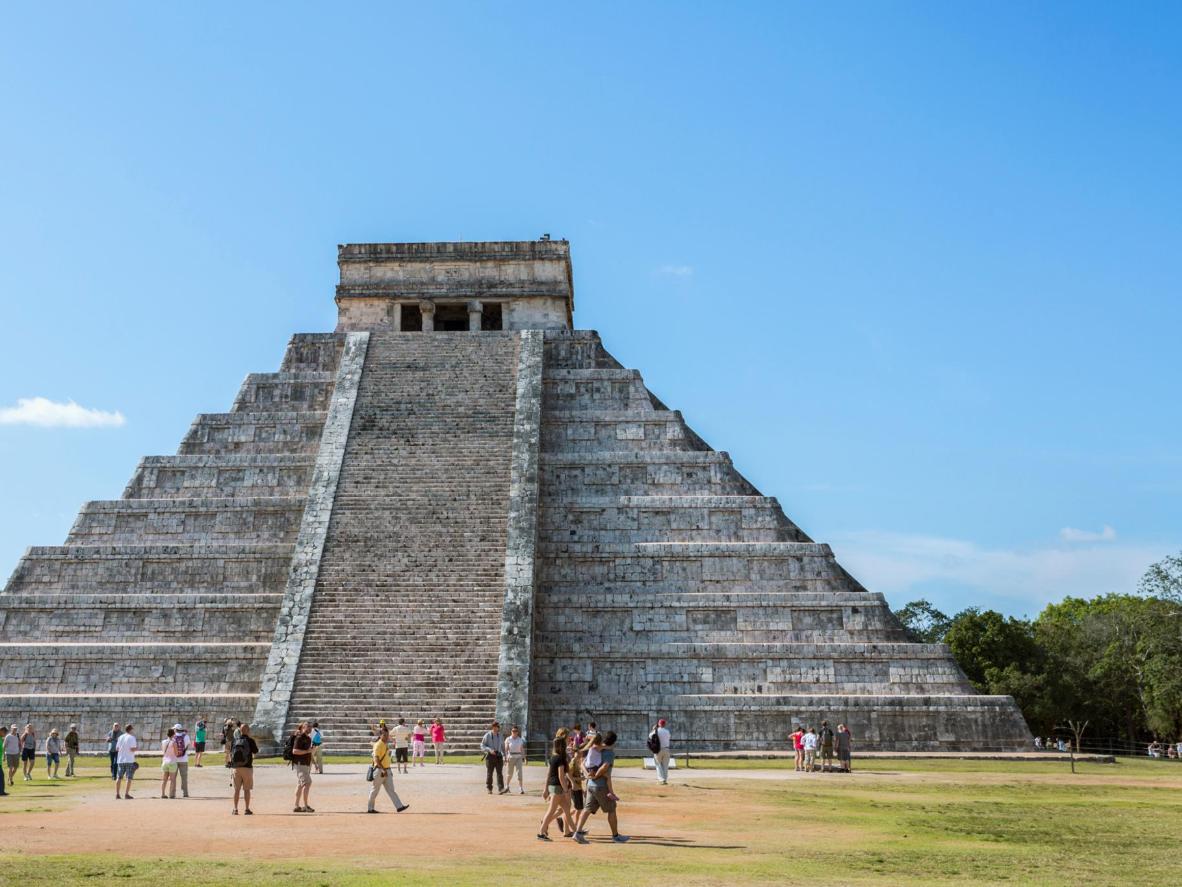
El Castillo pyramid, Valladolid, Mexico

El Castillo pyramid, Valladolid, Mexico

At its peak, the ancient Mayan city of Chichén Itzá was home to 30,000 people. Today its ruins draw about 1.2 million visitors per year. In the center of the complex sits El Castillo pyramid, a towering limestone tribute to the god Kukulkán. During the spring and autumn equinoxes, crowds gather to see the sun cast a shadow illusion of a snake creeping down the pyramid's steps. The nearby city of Valladolid makes for a handy base to explore the ancient city. Cool off at the Hotel Mesón del Marqués, a 17th-century mansion with a garden and pool.

Mexico City, Mexico

The ruins of the Aztec Templo Mayor sit alongside Mexico City Cathedral

The ruins of the Aztec Templo Mayor sit alongside Mexico City Cathedral

This modern megacity was built on top of the conquered Aztec capital, Tenochtitlan. Its pre-Hispanic past was all but forgotten until the 1970s, when excavations unearthed the ruins of the main temple next to the city's Zócalo Square. Hotel Histórico Central is just a few blocks from the Templo Mayor Museum. A short drive north of Mexico City lies Teotihuacán, which the Aztecs dubbed the “birthplace of the gods.” Visitors can still scale its Sun and Moon Pyramids and walk the Avenue of the Dead that links them.

Mérida, Mexico
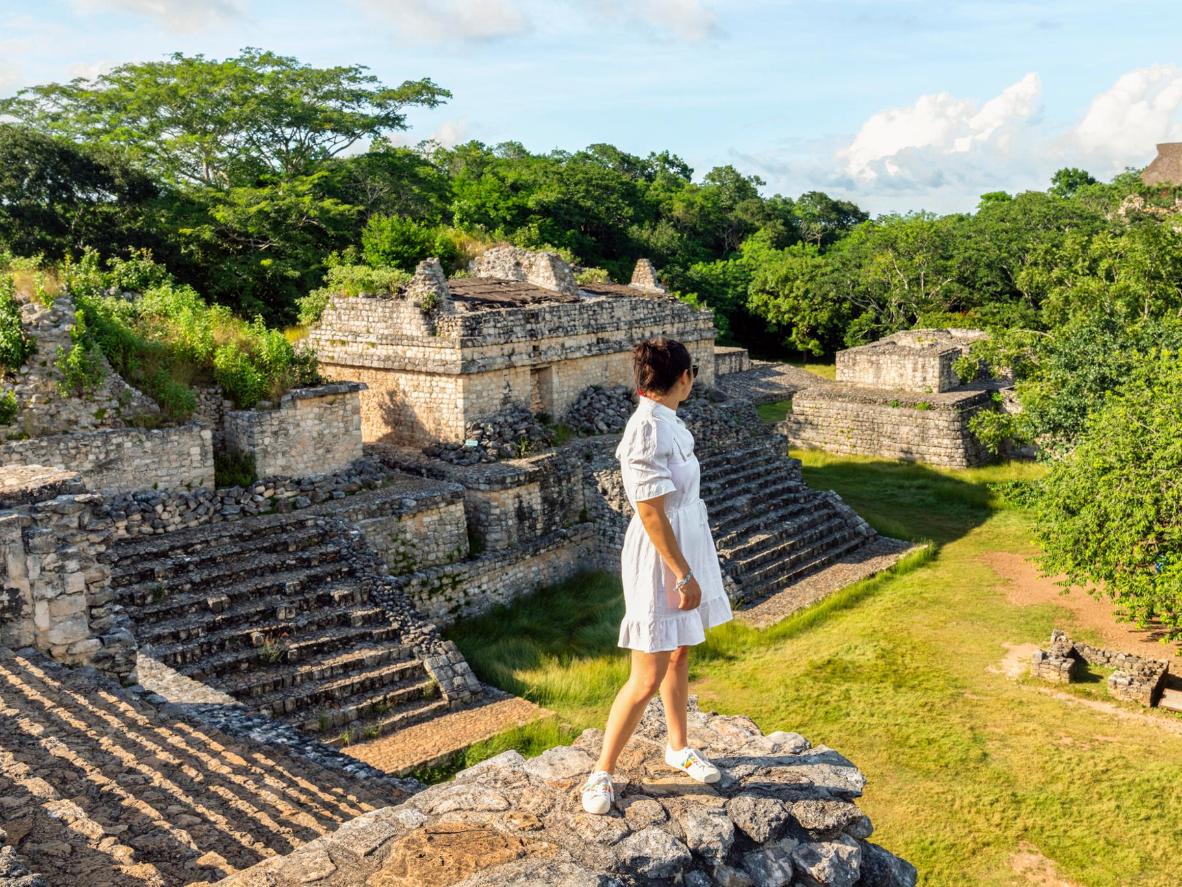
Uxmal’s ancient ruins, Mérida, Mexico

Uxmal’s ancient ruins, Mérida, Mexico

The colonial city of Mérida is the Yucatán region’s cultural capital. In its northern suburbs, the Gran Museo del Mundo Maya houses a vast collection of Mayan art, crafts, and historical relics. An hour’s drive south is the Uxmal archaeological site, a huge complex of smooth-faced pyramids and ornately-carved temples – many of which you can still climb. After a day exploring the ruins, the shady courtyards and outdoor pool at Hotel Caribe Mérida Yucatán provide a break from the heat.

Oaxaca, Mexico
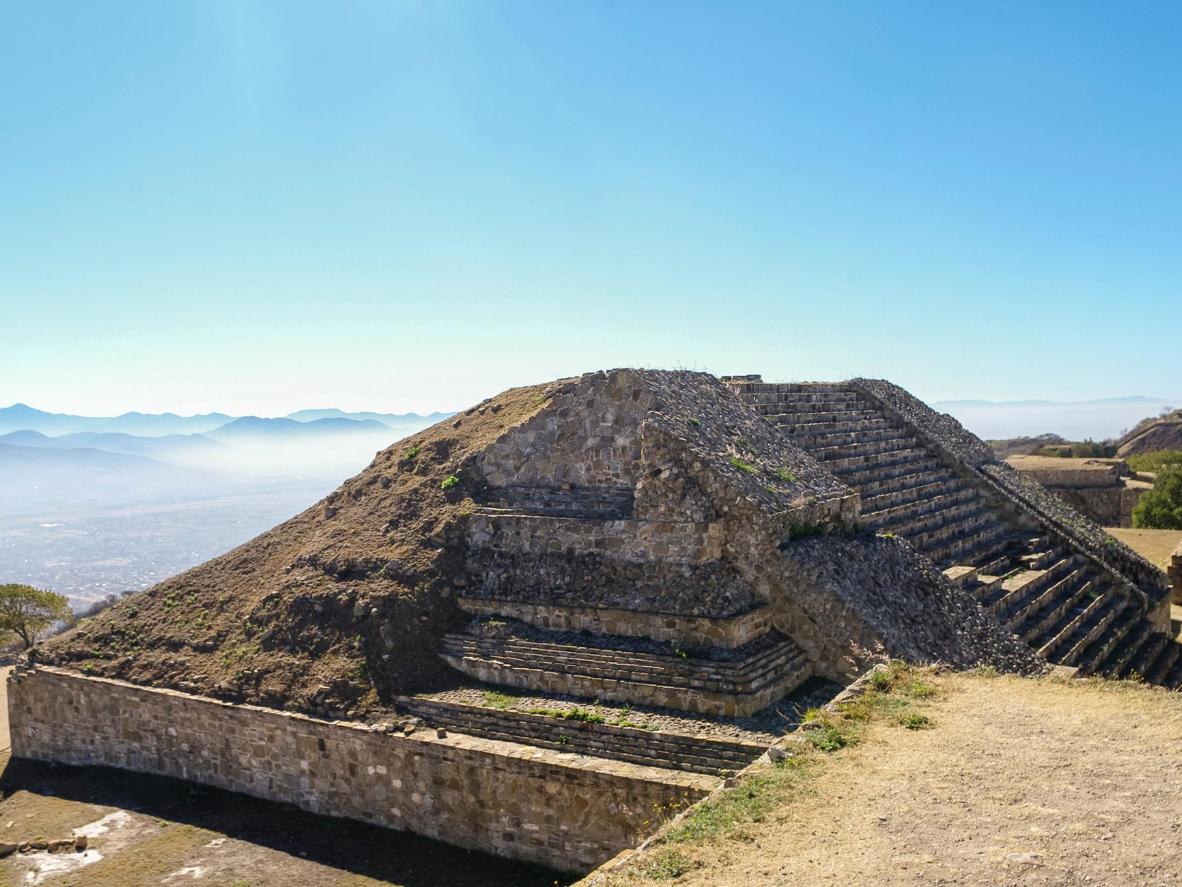
Monte Alban, Oaxaca, Mexico

Monte Alban, Oaxaca, Mexico

Set high on a hilltop plateau, Monte Albán was once the capital of the Zapotec empire. This ancient civilization ruled over the Valley of Oaxaca, filling the fortified city with stepped pyramids, ball courts, and hundreds of contorted, stone figures known as “danzantes.” Down on the parched valley floor, the archaeological site of Mitla was the region's spiritual center. Look out for eagles circling overhead as you explore its low, angular temples and geometric designs. Back in town, sleep in a converted 15th-century building, Quinta Real Oaxaca.

Thứ Tư, 11 tháng 8, 2021

11 top resorts around the world for your vacation in summer 2021

11 top resorts around the world for your vacation in summer 2021

Summer 2021 is here and it's time to start taking sustainability seriously. That means thinking carefully about where you take time out on holiday.

You may also like:

We've spent the last year visiting a whole host of eco-resorts around the world so that you can opt for conscious hotels putting time and effort into preserving the environment.

Here's our guide to the top 11 sustainable travel destinations. But before you pack your sunhat and head to the sun, don't forget to carbon offset your flights to balance out your carbon footprint.

1. Tivoli Ecoresort Praia do Forte, Brazil


We went to stay at Brazil's Tivoli eco-resort Praia do Forte, buried in the Atlantic Forest of Bahia. Staying here is an open-air forest experience, far from the sterile, all-inclusive destinations described as 'getaways' online. Among its numerous environmental initiatives, the hotel helps protect endangered sea turtles and educates the local community on how to live more sustainably.

You'll eat delicious pão de queijo like the locals, while immersed in nature in true sustainable luxury.

2. Zadun, A Ritz-Carlton Reserve, Mexico


The Zadun Ritz-Carlton in San José del Cabo, Mexico, not only champions the environment, it also supports local artistry in the area - which is why it's so trendy. The whole hotel is ultra modern, with pillows made of handwoven textiles and sculptural art pieces in every bedroom.

Guests are invited to take part in Jean-Michel Cousteau's Ambassadors of the Environment programme and are also taught about the marine sanctuaries of the Sea of Cortez.

3. Six Senses Ninh Van Bay, Vietnam


Model and wellness influencer Danielle Copperman visited Six Senses Ninh Van Bay for us and gave it rave reviews. The hotel is an 'isolated eco-paradise', in her own words, featuring on-going conservation projects and growing fresh produce on site. Danielle explores the plantations and samples the local fruit on offer, from lemongrass, mango and papaya, to pomelo, kumkwat and dragon fruit.

There are opportunities for scuba diving and jungle adventures, with an equal emphasis on wellness and relaxation - think soothing spa treatments and flying yoga.

4. Terre Blanche, Provence, France


Herein lies Provence's best kept secret. Terre Blanche is a luxury, five-star resort spanning 750 acres of lush, leafy terrain in the south of France. A proud member of ‘The Leading Hotels of the World’, Terre Blanche boasts admirable green credentials, from sustainably sourced food and eco-friendly golf courses, right down to the mattress you sleep on.

We visited in September, when the weather was around 25°C on average and the greenery and extensive gardens were in full bloom. In close proximity to world-renowned vineyards, you can expect a glass of rosé on ice to accompany you on the terrace when you arrive.

5. Dharana at Shillim Estate Retreat and Spa, India


The Shillim retreat and spa sits right in the middle of the Sahyadri mountain range, not far from Mumbai. We spent a week soaking in the Ayurvedic principles the retreat has to offer, practicing yoga every morning at 6 am, or else cocooned inside a canopy with the rain overhead and the smell of forest in the air.

The hotel's 'Dharana' wellness programme heals you both inside and out, combining spa treatments with daily meditation and a detox diet. And from an eco perspective, the Shillim team plant millions of new trees in the nursery every year and are passionate about preserving the local environment.

6. Villa Persa, White Key Villas, Island of Spetses, Greece


Spetses is an enchanting, car-free island in Greece. We spent our days exploring the harbour and cycling down to secret coves on electric bikes, before returning to the White Key's 6-bedroom Villa Persa.

Bobbing fishing boats and clusters of white and pink houses are your only company, as you dine al-fresco on fresh grilled octopus prepared by the local chef.

7. Château d’Audrieu, Normandie, France


Mid-way through 2019, we visited the quaint and cosy Château d’Audrieu. If you're keen on exploring Normandie in chic 'chateau style', this hotel is the place to stay. The grounds are steeped in history and immersed in the nature surrounding it. With the smell of fresh pine in the air, honeymooners will enjoy the secluded atmosphere and ornate architecture.

The best thing about Château d’Audrieu is the food - seasonal, freshly prepared meals are served every evening in Le Seran, the restaurant "in hot pursuit of a Michelin star."

8. La Granja, Ibiza


Despite Ibiza's reputation for wild nightlife and a thriving party scene, the Spanish island has hidden talents too. Most notably, its surprisingly fruitful farming industry - which is certainly evident at La Granja.

The farmhouse property is a modern take on the traditional Mediterranean lifestyle, embracing the natural way of life and has built its concept around benefiting from and giving back to the land. The rustic feel brings you back to basics and serves as a much needed break from the daily grind.

9. Stonefield Villas, Soufriere, Saint Lucia


Stonefield Villas is the first Saint Lucian resort to join Kind Traveller, the sustainable hotel and travel platform. It makes the most of the island's diverse environmental makeup, with geothermal sulphur springs nearby, white sand beaches in view and acres of rainforest surrounding it.

The family-run feel of the resort is what makes it so special, along with the outdoor terraces, private pools and hammocks to lounge in - all you need you for a week in the Caribbean sun.

10. The Amaala Project, Saudi Arabia


Amaala is set to be Saudi Arabia's first zero-carbon resort, built by HKS architects. Still in its nascent stages, building work is ongoing, but the first phase of the project is planned to be completed by 2021.

The reefs on the Egyptian side of the Red Sea have been badly abused by mass tourism in recent years, so their preservation and conservation is paramount to the architects. Keep an eye out for the grand opening to be one of the first guests at this exclusive eco-friendly resort.

11. Cottages Antoinette, Champagne, France


For a truly rustic escape, set up camp at Cottages Antoinette. We went and stayed in the ecological wooden houses, all on stilts, in the heart of the Champagne countryside. The whole experience is almost meditative with views over the vineyards stretching as far as the eye can see. Decor is minimum and you're surrounded by glass walls, making the space feel light and spacious.

Building the cabins required little energy in the first place, and neither does running them daily. The whole ethos is based around energy efficiency and the sun shining on the bay window heats up the space quickly so you are nice and toasty inside. Plus, you can easily get there by train from Europe, cutting out the need to fly - a real bonus on the environmental front.

Thứ Hai, 14 tháng 9, 2020

 Dancing to commemorate the deceased in Mexico

Dancing to commemorate the deceased in Mexico

This custom, also known as Día de los Muetos, dates back thousands of years ago. Today, the festival attracts tourists to experience Mexico.

Festival Día de los Muetos (Day of the Dead) is held annually on the first 2 days of November in Mexico. The festival originated a few thousand years ago in the city of Oaxaca, in the southeast of this country. Traditionally, people place flowers, candles, and dishes during the visit to the cemetery in Oaxaca on the evening of October 30. Photo: National Geographic.


Visitors who want to experience the Mexican death festival need to choose the correct time to not be confused with Halloween. Photo: Independent.

During the celebration, the altar is placed in the private house and the cemetery. This is a place to welcome dead souls back to reunite with their families. This sacred corner is covered with white towels, plastered with vignettes, placed photos of family members with small candles and dolls. Photo: Getty.


Marigold is indispensable for Día de los Muetos. This is a flower symbolizing the sun and rebirth. According to folklore, the scent of flowers attracts souls. According to custom, family members spread petals from the altar to the cemetery, in public places to lead the wandering soul back to the resting place. Photo: newyorklatinculture


In many countries, the day of commemorating the deceased often brings a mourning and sad atmosphere. However, the Mexican Día de los Muetos festival brings bright colors, filled with happiness. Photo: National Geographic.

People often gather, celebrate with families, organize street parties, parade, dance to music. In many towns there are parades "dancing with the dead". Here, participants will dress up with colorful masks, skeletons and puppets. Photo: National Geographic.


The Día de los Muetos festival is indispensable for traditional dishes. Food is made mainly from cornstarch, sugar, chocolate or fruit depending on the taste of each family. Some typical dishes of the festival of the dead are such as skull chocolate candies, bone-shaped breads, sweet fermented beverages made from agave resin ... Photo: AGCuesta, Geographic.

One of the places to hold the unique Día de los Muetos festival is the outskirts of Oaxaca city. This place preserves many handicraft villages such as weaving, embroidery, wood carving, typically San Bartolo de Coyotopec with black pottery. Photo: National Geographic.

In 2008, the festival of the dead (Día de los Muertos) in Mexico was recognized by UNESCO as the Intangible Cultural Heritage of Humanity. Photo: National Geographic.


Thứ Sáu, 28 tháng 8, 2020

Inside the most dangerous festival in Mexico

Inside the most dangerous festival in Mexico

The luckiest thing of the explosive hammer festival this year is no death recorded because of gunpowder, although there were 61 injured people. 

Fiesta de los Martillos Explosivos (Explosive festival) took place in the small town of San Juan de la Vega, to celebrate Shorve Tuesday (fast Tuesday - the last very diverse and more protein meal before coming to vegetarian season) annually. The festival organized aims to honor the god protecting the local secret, the San Juanito. The festival name brings a dangerous feeling of explosions. Indeed, it is a danger truly, according to the consideration of many people. 

The main event occurred in a field full of stones near a railway in the town. Before the event, people here drawn a warning board crossing the land, behind it has a shrine. This is the worshiping place of god protecting the festival. Next, a music band would play sings on a background of trumpet, tromone, and drumbeat. 


However, music would be overwhelmed by explosions soon. Nathan Williams, a local photographer said people will use a gunpowder and sulfur combination, tieing a hammer by scotch tape. Then, anyone can create a big explosion. Williams said he often attends this traditional festival. 

During the event, ground rocks violently by explosions and fills gunpowder smell. shrapnels splash across gravel-paved roads, smokes of gunpowder rise over a church. Many people participating feel like losing in a war zone. 

Some people participating in the event wear armor made by themself, facemask, or helmet. Others wrap the towel around and wear dark glasses against the affect of explosions. 

The festival lasts for a week, along with religious rites. However, explosions only allow occurring on Tuesday (this year on February 25). Also this day, people also organize a march going through the town.  

Thứ Sáu, 31 tháng 7, 2020

Phu Quoc into the top 10 emerging destinations

Phu Quoc into the top 10 emerging destinations

Tripadvisor just released the list of emerging destinations voted by tourists the most in 2020, in which, Phu Quoc is in the 7th place of the list.

Phu Quoc, Vietnam
Phu Quoc, Vietnam is an emerging destination getting attention a lot from visitors.

Phu Quoc, Vietnam


The pearl island of Phu Quoc owns long, white-sand beaches, with clear and blue water attracting both domestic and international tourists. Diving of watching coral and snorkeling are sports favored the most here, along with windsurfing, skiboarding with high-speed ships or catching octopus... In Phu Quoc, tourists can not miss the Dong Duong market with special and fresh seafood. Image: Khanh Tran

Kaliningrad, Russia

Kaliningrad, Russia


Being a land between Lithuania and Poland, next to the Baltic Sea, Kaliningrad is also called Konigsberg at initial founding days by the Teutonic knights and used from the 13th century to after World war 2. Coming to this city, tourists don't forget to call at the Konigsberg catholic build since the 14th century, see sight amber museum, and buy souvenirs made from amber. Image: Pixabay.

Saranda, Albania

Saranda, Albania


In the next coming years, Saranda will become a popular destination attracting a crowd of people who love beach tourists. This city owns a long, white-sand and beautiful beach, and vast olive forests opposite with the famous Corfu island of Greece on the other side of the Ionia sea. Image: Agoda

Beirut, Lebanon

Beirut, Lebanon


Beirut's attractions to tourists come from shopping venues, destinations. It is dubbed "Paris of Middle East", although it still stuck in a war. Capital of Lebanon has been rebuilt much time, has a modern architecture style interwoven with works that bring vestiges of Ottoman and former France colonial. The crowded streets such as Hamra and Ashrafieh have exciting activities at night. National museum and Gibran Museum are destinations for those who love history. If you like jogging, cycling, tourists can come to the Corniche complex. Image: ces-med.

Luxor, Egypt

Luxor, Egypt


Coming to Luxor, northern Egypt, tourists get an experience of flying in hot air balloon above the valley of kings, discovering famous ancient buildings lied in the bank of the legend Nile river. Image: pixabay.

Naoussa, Greece

Naoussa, Greece


Naoussa is a beautiful village in the north of Paros island, next to the Aegean sea. Tourists coming here don't forget to experience the roads network as a maze, shops full of local produce and enjoying coffee near the sea, a fresh and delicious octopus, and immersing in the space of a typical Greece. Image: pixabay.

Rugen, Germany

Rugen, Germany


Rugen is apart of Mecklenburg-West Pomerania, northern Germany. It is the biggest island in Germany, Rugen owns a lot of topographic types that challenge people who love to explore a long, white-sand beach extending to the steep cliffs. One resort built-in 1818 is also one of the famous resorting complexes here. In addition to experience in the beach, tourists can visit more 2 national parks, castles, old mansions of royal. Image: pxxfuel.

Monopoli, Italy

Monopoli, Italy


It is less known than 2 towns of Alberobello and Ostuni nearby but Monopoli is still an exciting seaside town in Puglia, with old churches lied sporadically in the zic-zac alleys washed by white lime. Charming of this medieval town is also lying in an old fish port and a series of white painted walls, a golden sand bay with crystal-clear seawater. Image: swaytheway.

La Paz, Mexico

La Paz, Mexico


Being the capital of Baja California Sur state, La Paz used to be a stop of those who are on the way finding resorts on the beach of Cabo San Lucas. However, Pa Paz still has its own attraction to keep tourists from across the globe staying in the artistic streets near the bank, the restaurants with a stunning view of the sea. Image: pixabay.

Curacao

Curacao


Curacao is a country locating in Caribe bay, near the shore of Venezuela, attracting mostly people with a passion for diving. If you find a place to challenge yourself with scuba diving or snorkeling, Curacao is an ideal place for you. The beaches, sandbanks and gentle waves are suitable for even children tourists. If you come to Curacao, visitors must remember to visit Willemstad, the capital of the country with an area of just around 444 km2. The ranges of pastel-painted houses here are a world heritage recognized by UNESCO. Image: pixabay.